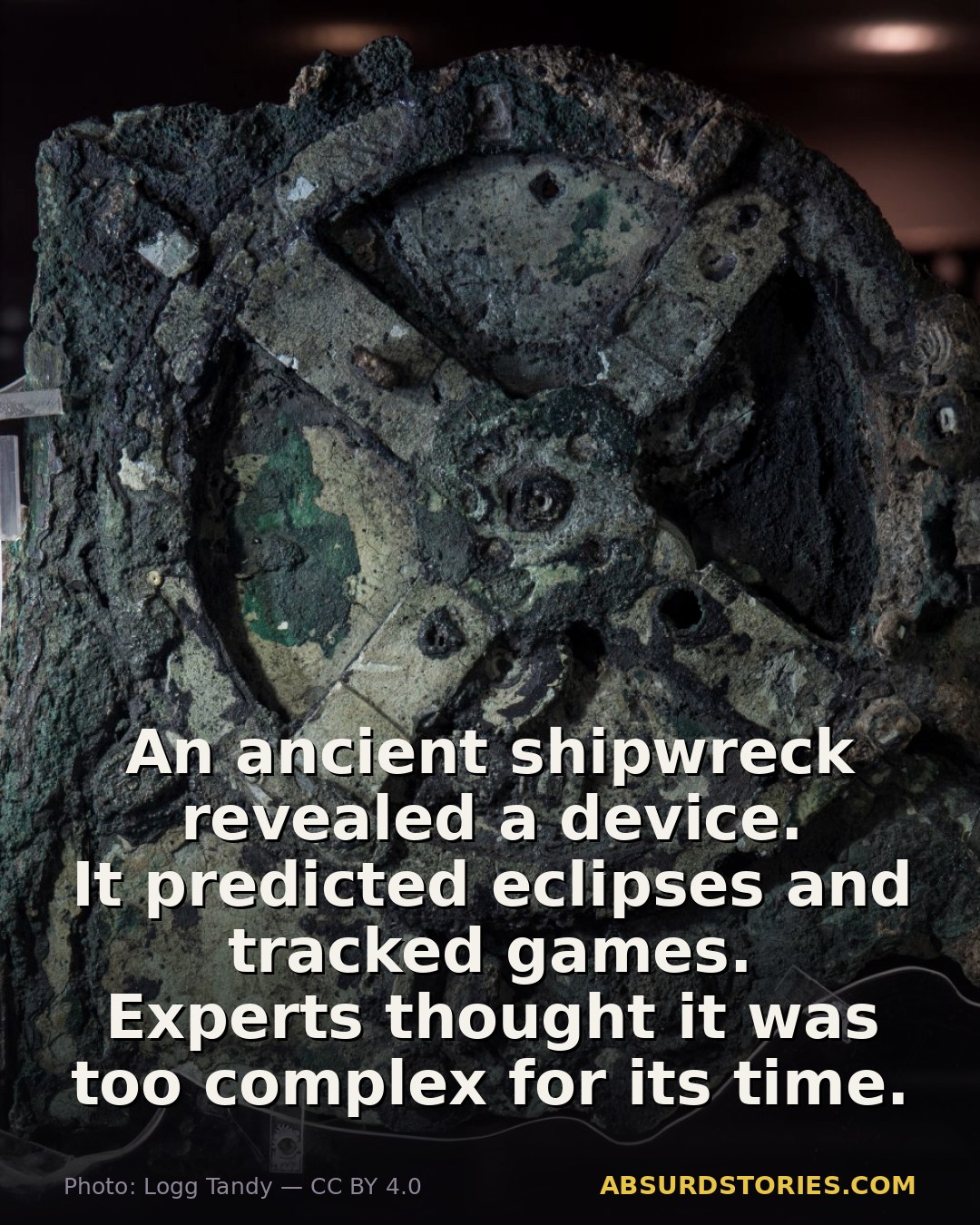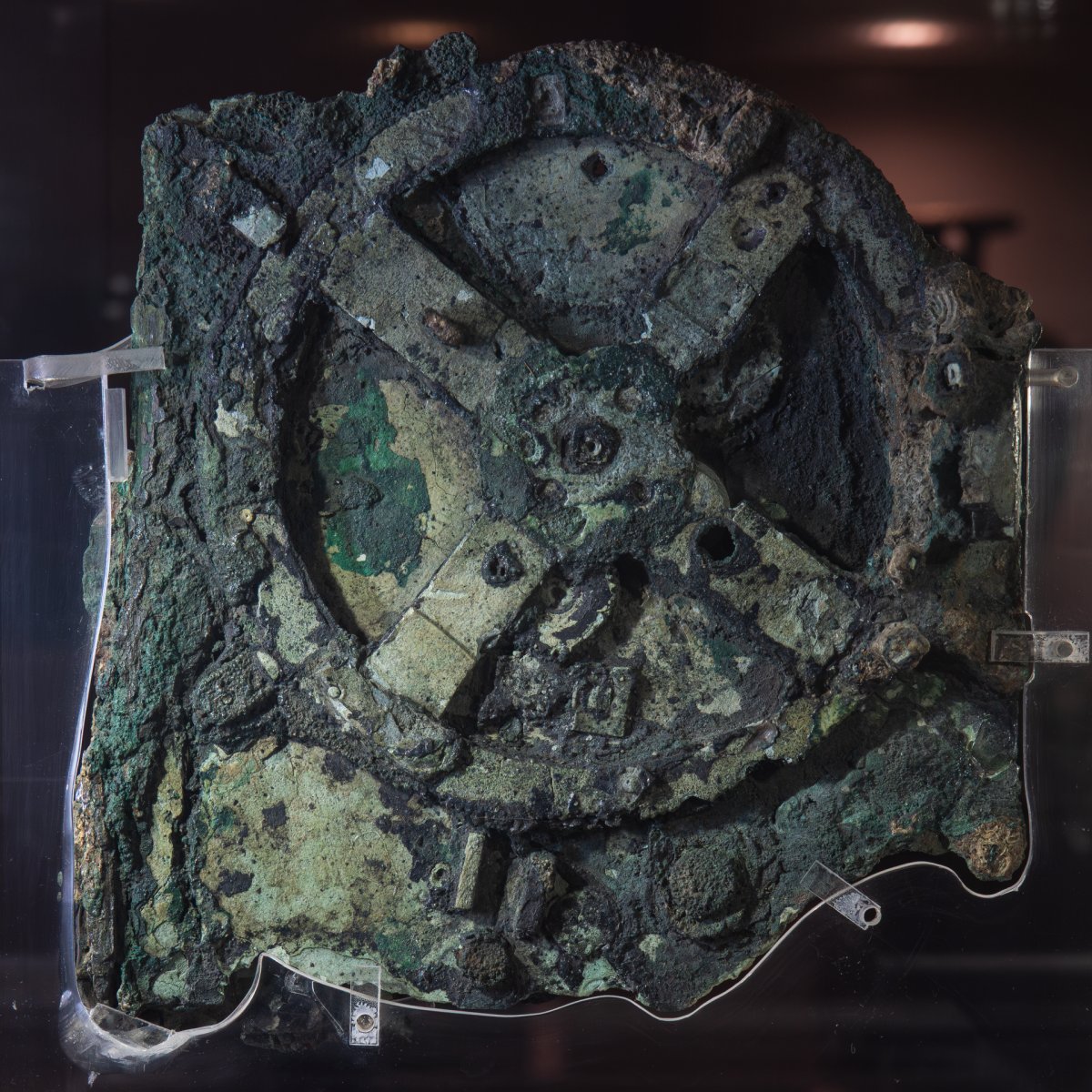
The discovery of a remarkable device from an ancient shipwreck has puzzled historians and scientists alike. The Antikythera mechanism, found off the coast of Greece, is considered an analogue computer, and it dates back to the 2nd century BC. This extraordinary artifact was used to predict astronomical events and even the dates of athletic competitions, much like the Olympic Games.
In 1901, divers recovered the mechanism from a Roman cargo shipwreck at a depth of 45 meters. At first glance, it appeared as a corroded lump, not very different from other treasures and artifacts brought to the surface. However, its significance didn't go unnoticed for long. In 1902, archaeologist Valerios Stais, together with his cousin, Greek politician Spyridon Stais, reportedly found one of the pieces of rock had a gear wheel embedded in it, igniting interest in its potential function.
The mechanism consists of numerous intricate gears and inscriptions, showcasing the advanced understanding of mechanics possessed by ancient Greek scientists. With 37 bronze gears, it could simulate the motions of the Sun and Moon and predict eclipses with remarkable precision. Researchers have suggested it may have been built using knowledge from prominent astronomers of the time.
The complexity of this device is astonishing. It was not until the 14th century that machines of similar sophistication re-emerged in Europe. The Antikythera mechanism hints at a lost era of scientific achievement, one that challenges our understanding of technological progress in ancient civilizations.
Despite its fragmented state, efforts to reconstruct the mechanism reveal a device that was both a scientific tool and a marvel of engineering. As further research uncovers new insights, the Antikythera mechanism continues to captivate imaginations, standing as a testament to the ingenuity of Hellenistic inventors.