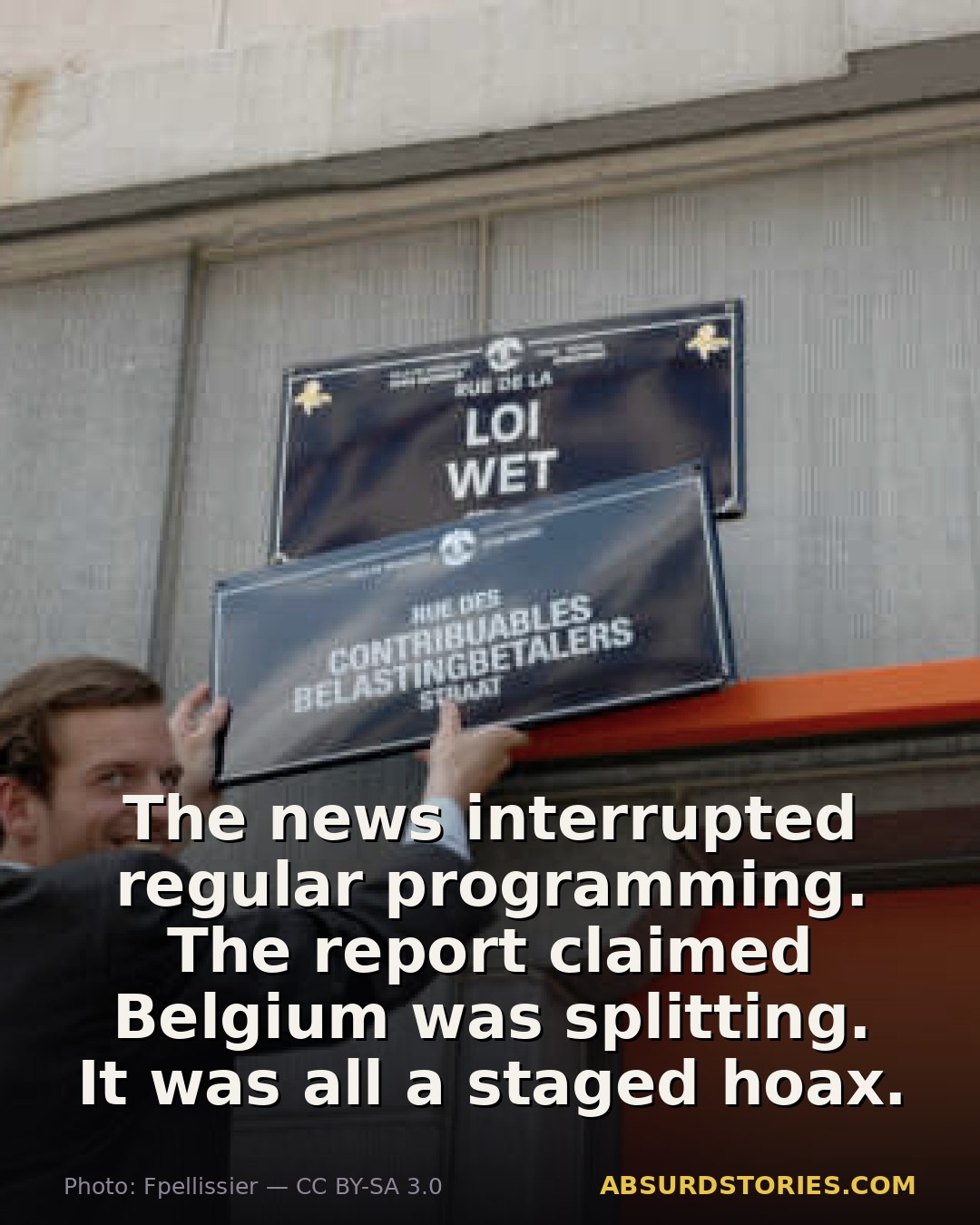
On December 13, 2006, a startling news bulletin interrupted regular programming on the French-language Belgian public TV station RTBF. The report claimed that the Flemish parliament had declared independence from Belgium. This announcement was reminiscent of Belgium's own separation from the Netherlands 175 years earlier.
To lend credibility to the news, the broadcast featured interviews with various politicians, some of whom were aware of the prank. Staged footage showed the royal family being evacuated and crowds celebrating with the Flag of Flanders. The dramatic presentation led to widespread fear and concern among the French-speaking population of Belgium.
As the panic spread, the hotline established by RTBF received an overwhelming 2,600 calls, and the station's website crashed under the traffic. Just thirty minutes after the report aired, the media minister demanded that an on-screen message clarify that the news was fictional.
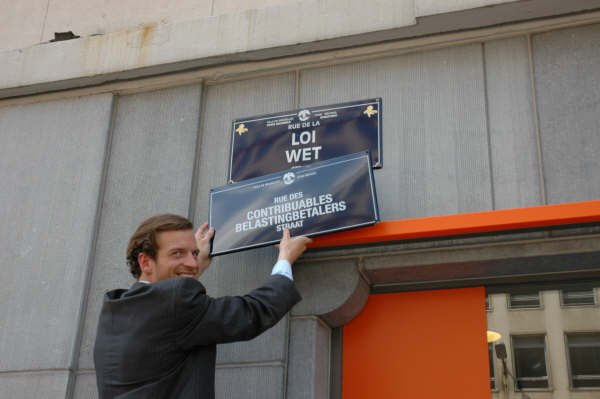
The hoax was orchestrated by journalist Philippe Dutilleul and had been in preparation for two years, under the codename BBB, which stood for Bye-bye Belgium. The intention behind the prank was to highlight the rising tensions regarding Flemish separatism and the potential for Belgium to split apart.
Leading Belgian politicians condemned the broadcast as irresponsible. Among those who spoke out were Prime Minister Guy Verhofstadt, Flemish Minister-President Yves Leterme, and Walloon Minister-President Elio Di Rupo. The international community also reacted, with Luxembourg's Prime Minister Jean-Claude Juncker expressing his discontent, stating that such matters should not be trifled with.
The hoax not only served as a catalyst for discussion regarding Belgium’s political landscape but also showcased the power of media in shaping public perception.