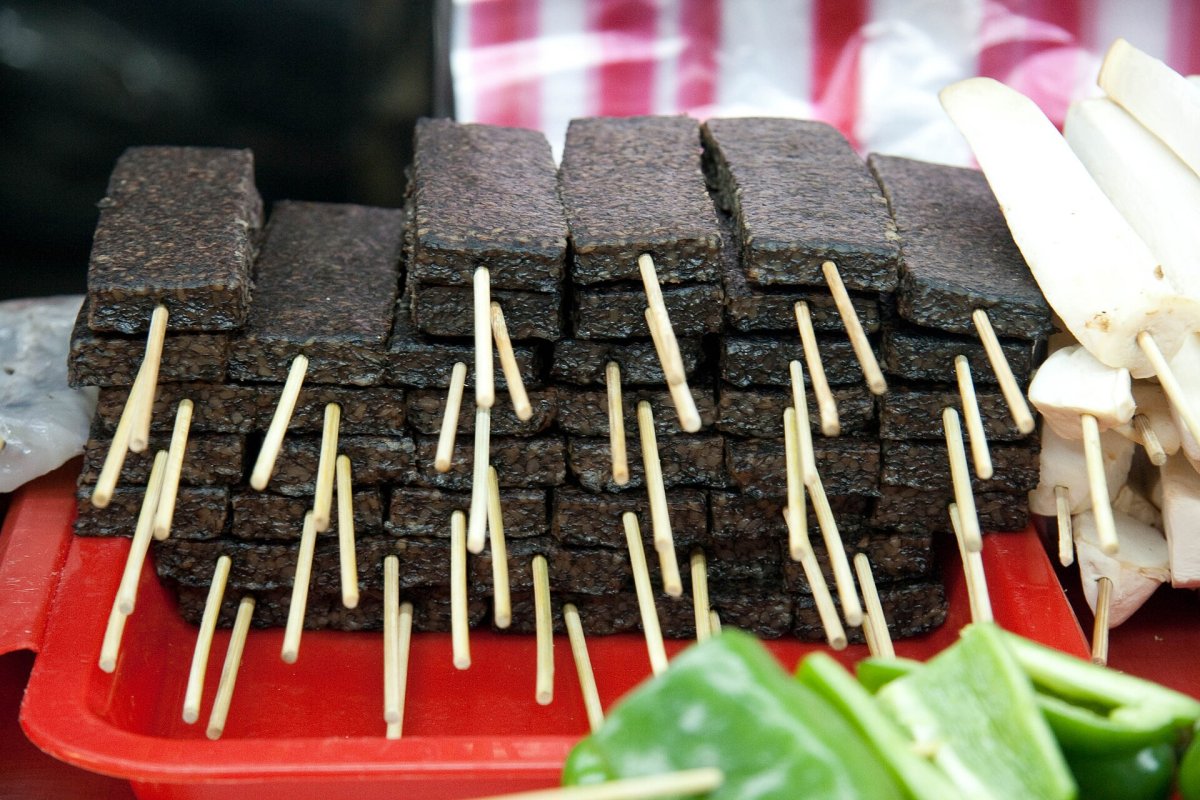
In many cultures, blood serves as an ingredient in various dishes. It can be found in unique forms such as blood sausage and pancakes. The versatility of blood in cooking is surprising.
Blood sausage is a prime example, created by cooking animal blood with various fillers until it thickens. Common ingredients include meat, grains, and spices. Different regions have their own varieties with distinct flavors.
In addition to sausages, blood can be used in pancakes, especially in places like Galicia and Scandinavia. The creativity in using blood for breakfast is noteworthy.
Soups and stews also incorporate blood as a key component. Recipes like czernina or dinuguan showcase how blood enhances flavors and textures in savory dishes.
Congealed blood takes on other forms, such as blood curd or blood tofu. These dishes are popular in Asian cuisines, where they are often used in soups and stir-fries.
Despite its culinary potential, blood is considered taboo in certain cultures and religions. Some belief systems discourage or outright forbid the consumption of blood.
Interestingly, blood's nutritional properties make it valuable. It is rich in protein and water, often referred to as "liquid meat" due to its similarity to lean meat.
The consumption of blood can elicit a variety of responses, from culinary curiosity to cultural aversion.