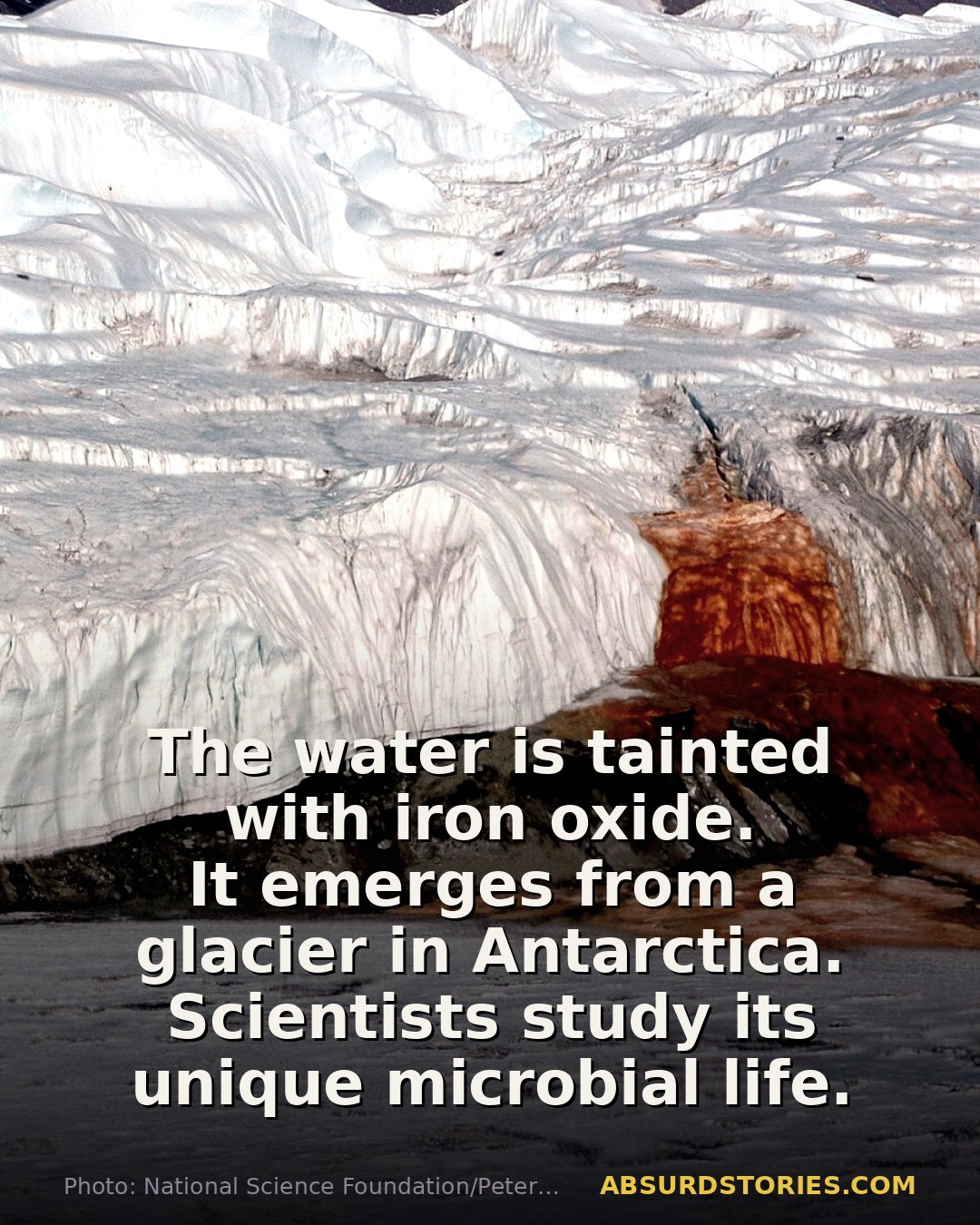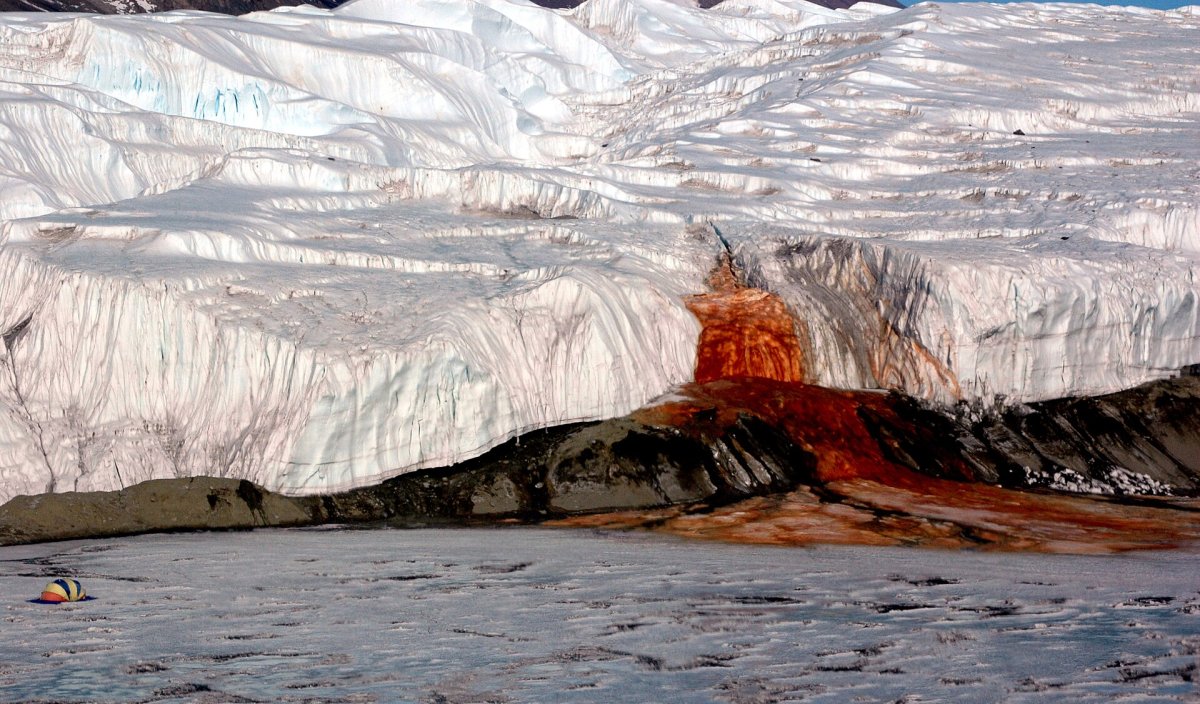
A striking waterfall in Antarctica flows with a blood-red hue, known as Blood Falls. This phenomenon occurs as iron oxide-rich saltwater spills from the Taylor Glacier onto the surface of West Lake Bonney.
Small fissures in the ice release this reddish plume, a product of an iron-rich, hypersaline pool located beneath layers of ice. The water is believed to be trapped seawater from an ancient fjord, with its unique color initially misattributed to algae.
The glacier is not frozen to the bedrock, likely due to the presence of concentrated salts from the saltwater below. This salty brine reaches salinities two to three times greater than seawater, resulting from both ancient seawater and surface lake evaporation in the dry polar climate.
Interestingly, the water sampled from Blood Falls is devoid of oxygen and high in sulfate and ferrous iron. A rare ecosystem of bacteria thrives in this inhospitable environment, metabolizing the sulfate and iron present. Scientists have identified several microbial species that survive without oxygen, displaying unique metabolic processes.
Research in 2014 involved directly sampling this brine to study its composition and the organisms living within. The findings shed light on adaptations to extreme conditions, with implications for understanding potential life on other planets.
Blood Falls serves as a natural laboratory for scientists examining how life can exist in extreme situations, reflecting both Earth's history and the possibilities for life in outer space.