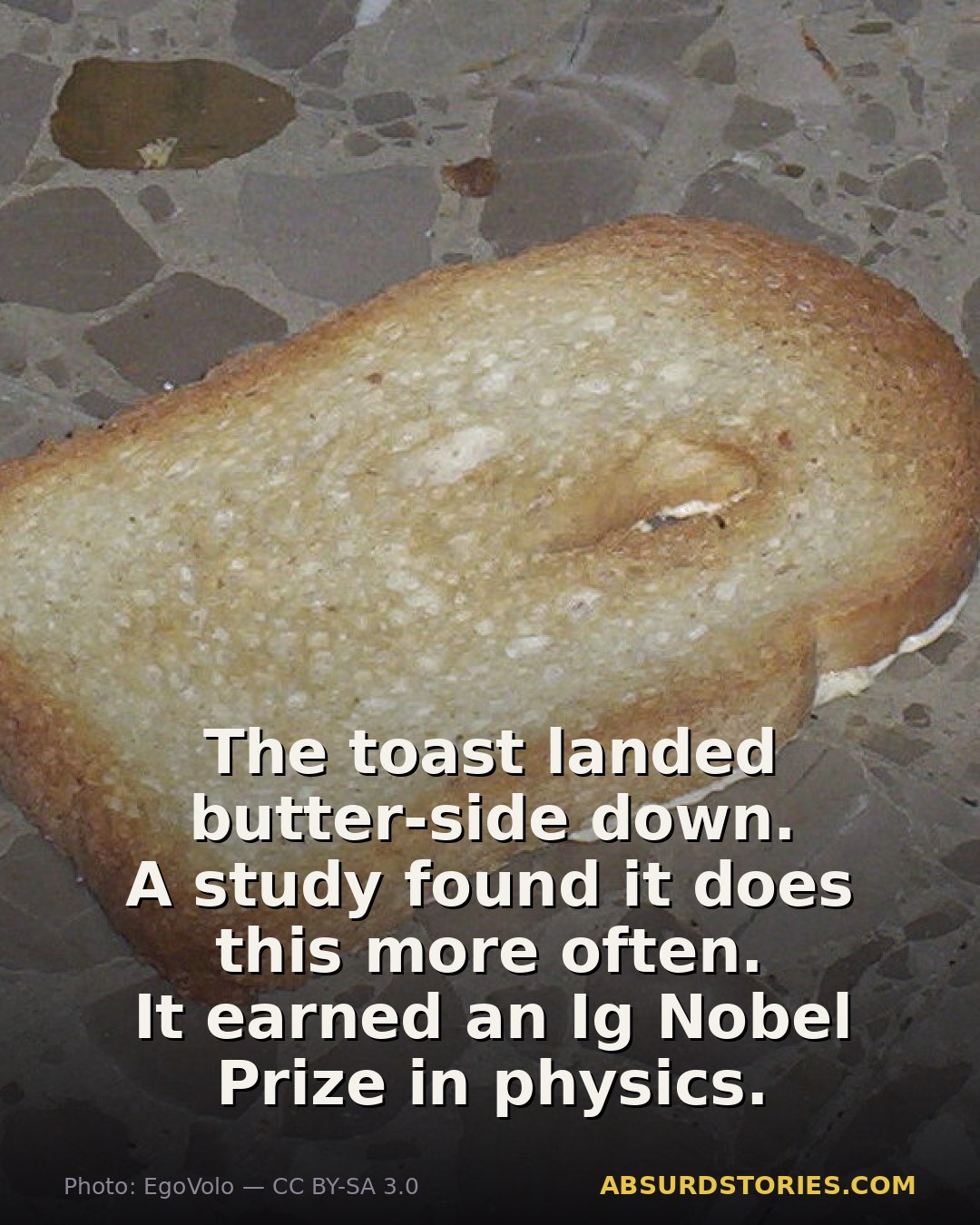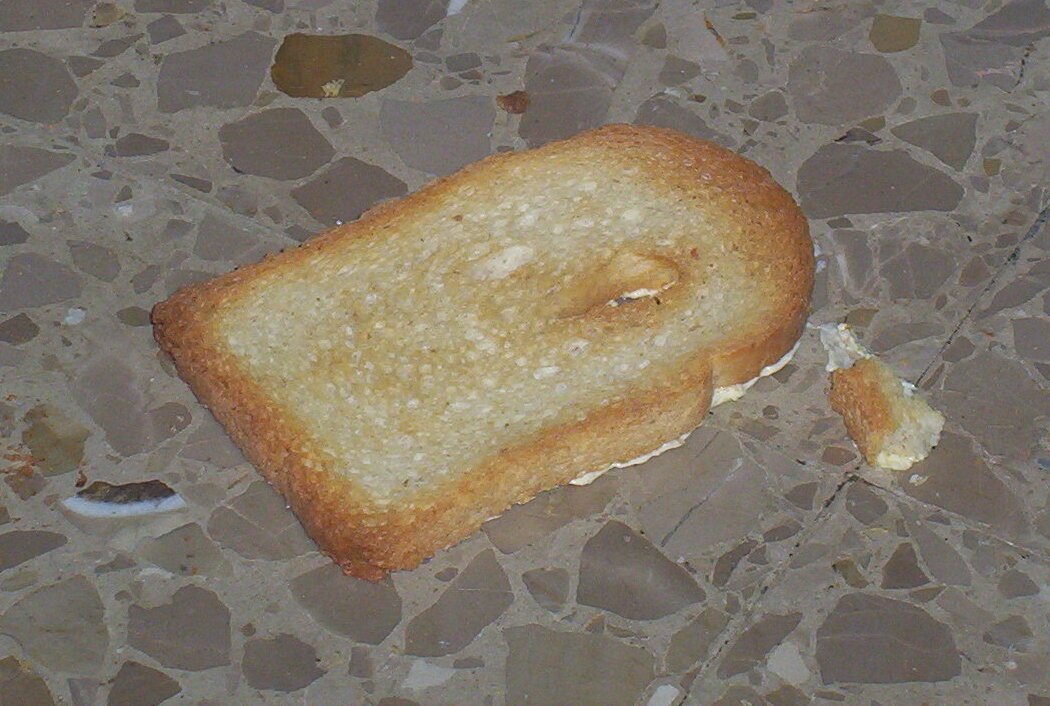
Imagine a slice of toast plummeting to the ground. In the midst of its descent, it often lands butter-side down. This peculiar observation has become known as the buttered toast phenomenon, and it has stirred curiosity and debate over the years.
Written accounts of this oddity date back to the mid-19th century. A humorous poem from 1884 reflects the belief that no matter what, toast always hits the floor butter-side down. While many dismissed this as mere superstition, scientific investigation into the matter revealed something unexpected.
A BBC study in 1991 found that when toast is thrown into the air, it will land butter-side down only about half the time, aligning with random chance. However, other studies have shown that when toast falls from a table, it is more likely to land butter-side down. This has led to further exploration into the physical laws governing such a phenomenon.
One study, led by Robert Matthews, focused on how toast falls. When toast slips off a table, it begins to fall at an angle, allowing it to rotate during its descent. Given most tables are two to six feet tall, the toast typically completes half a turn, resulting in it landing upside down. Interestingly, if the table is taller than ten feet, the toast can rotate fully and land butter-side up. If it is pushed off the edge at a high speed, it may also avoid flipping completely.
Matthews attributes this strange tendency to the laws of physics, linking it to human height and the principles of chemical bonds. His research into the mechanics of falling toast earned him the Ig Nobel Prize for physics in 1996, highlighting the absurdity and unexpected depth of this everyday occurrence.
Despite the humorous nature of the buttered toast phenomenon, its complexities draw attention to how we might consider the world around us. The next time you see your toast tumble, think about the physics at play. It’s not just a kitchen mishap; it’s a small demonstration of the laws of nature in action.