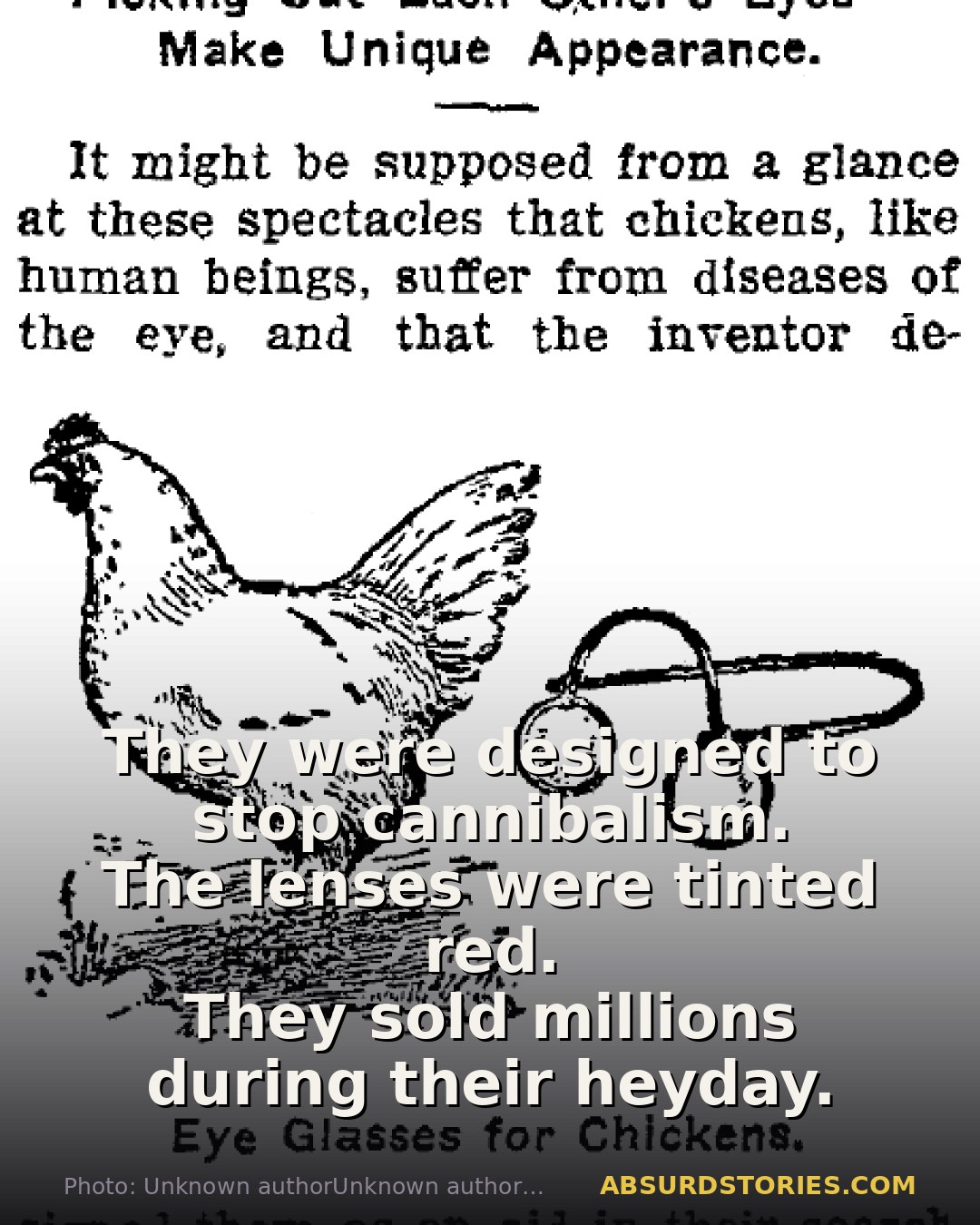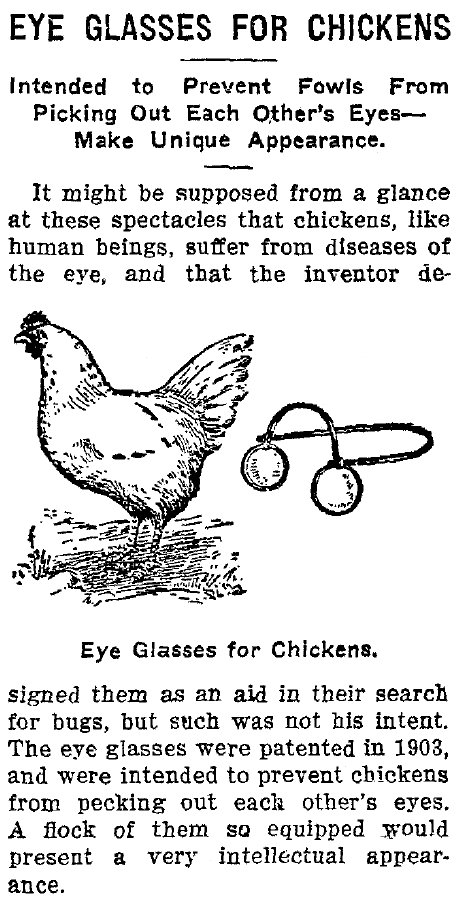
Imagine chickens wearing glasses. These unique devices, known as chicken eyeglasses, were created to prevent aggressive pecking and cannibalism among the birds.
Chicken eyeglasses were designed to allow vision while preventing harmful behavior. Unlike blinders, which obstruct forward vision, these glasses let the chickens see their surroundings.
The eyeglasses often featured rose-colored lenses. This tint was believed to mask blood, making aggressive chickens less inclined to peck at their injured peers. However, the effectiveness of this claim was questioned.
Manufacturers produced the glasses from materials like celluloid or aluminum. They typically consisted of oval panels fitting over the upper beak, secured with a pin through the nostril or a strap around the head.
Some designs even involved piercing the bone septum, a method now illegal in some countries due to animal welfare concerns.
A patented design for chicken eyeglasses first emerged in the early 1900s. They became commercially available through mail order and feed stores, indicating a mainstream acceptance of this unusual accessory.
Despite the decline in production, these eyeglasses were still in use decades later. In 1973, reports indicated that a farmer fitted 8,000 chickens with them. One inventor even proposed legislation in Kansas to require all chickens to wear them, although the campaign did not succeed.
Chicken eyeglasses reached pop culture fame when a seller appeared on a television show, claiming to sell millions of pairs each year. This moment highlighted the strange intersection of agricultural practices and novelty.
Today, they are a quirky reminder of the lengths people went to ensure the welfare of their poultry, turning chickens into unlikely fashion statements.