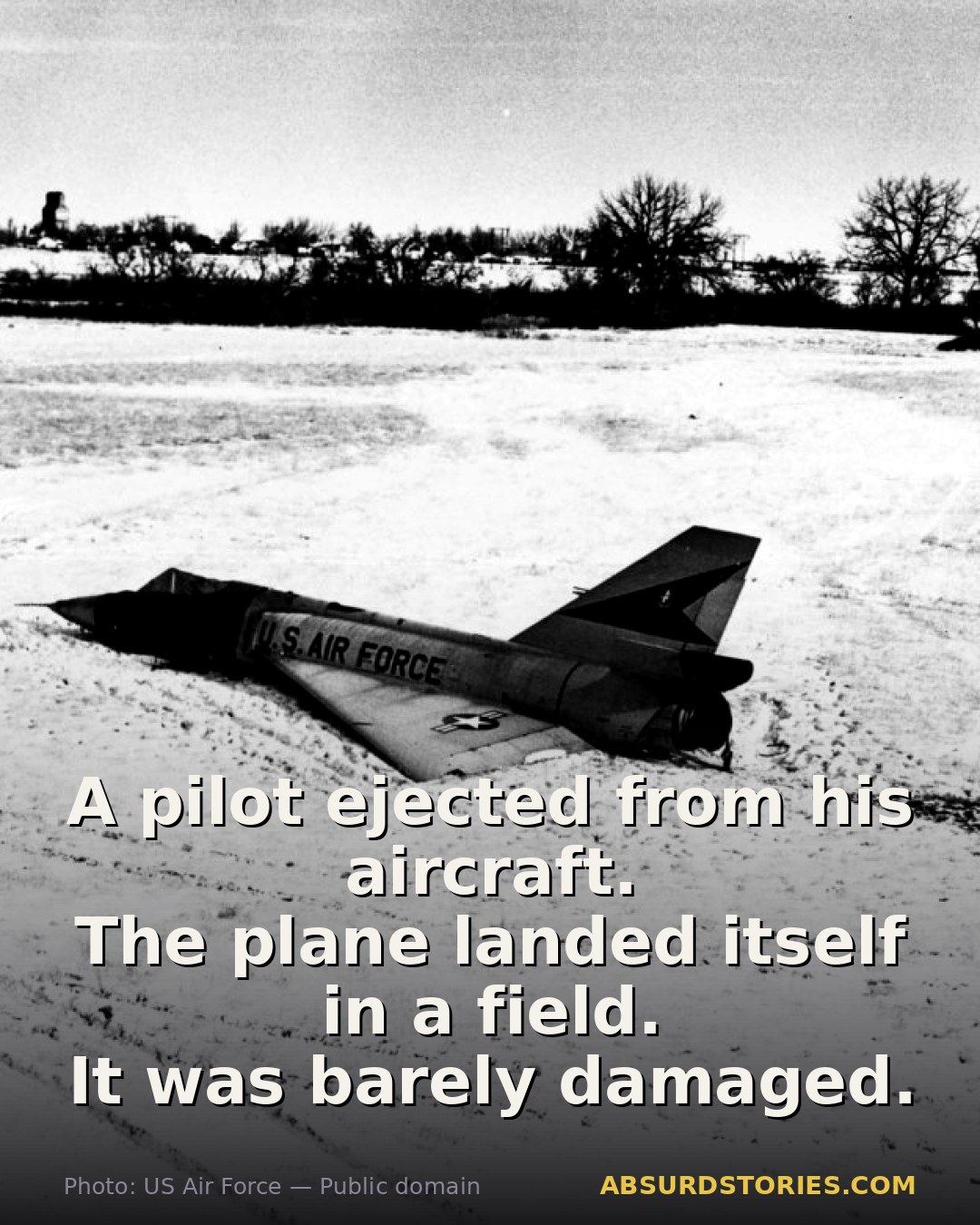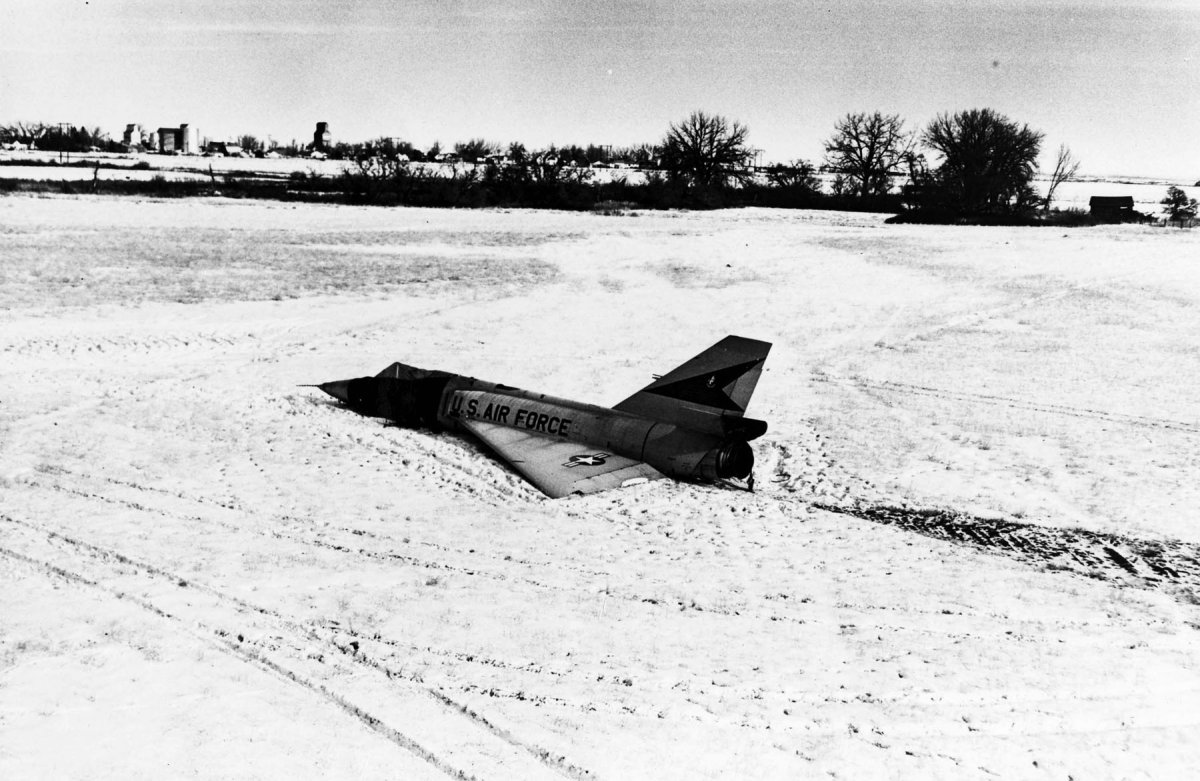
In 1970, a pilot had an unusual experience during a training mission. After ejecting from his Convair F-106 Delta Dart, he watched in disbelief as the fighter jet landed itself in a farmer's field in Montana. The aircraft, nicknamed the "Cornfield Bomber," surprisingly sustained minimal damage.
The incident occurred during aerial combat maneuvers when the aircraft entered a flat spin. The pilot, First Lieutenant Gary Foust, attempted to regain control using the drag chute. When that failed, he ejected from the aircraft at 15,000 feet. The sudden loss of weight and the blast from the ejection seat helped stabilize the jet, allowing it to recover from its spin.
As Foust floated down to the ground, he received a radio message from a fellow pilot, humorously urging him to get back in the aircraft. Meanwhile, the unpiloted F-106 continued its descent and skidded to a stop in a cornfield near Big Sandy, Montana.
Local authorities arrived at the scene, where the idling engine allowed the aircraft to slide across the ground after landing. The sheriff was advised to wait for the jet to exhaust its fuel, which took nearly two hours. Remarkably, the aircraft was deemed only slightly damaged, leading one recovery officer to claim it could have been flown out if not for the circumstances.
The jet was later repaired, returned to service, and even flown again by Foust in 1979. Eventually, it was retired and is now displayed at the National Museum of the United States Air Force in Ohio. The Cornfield Bomber serves as a testament to an unexpected twist in aviation history.