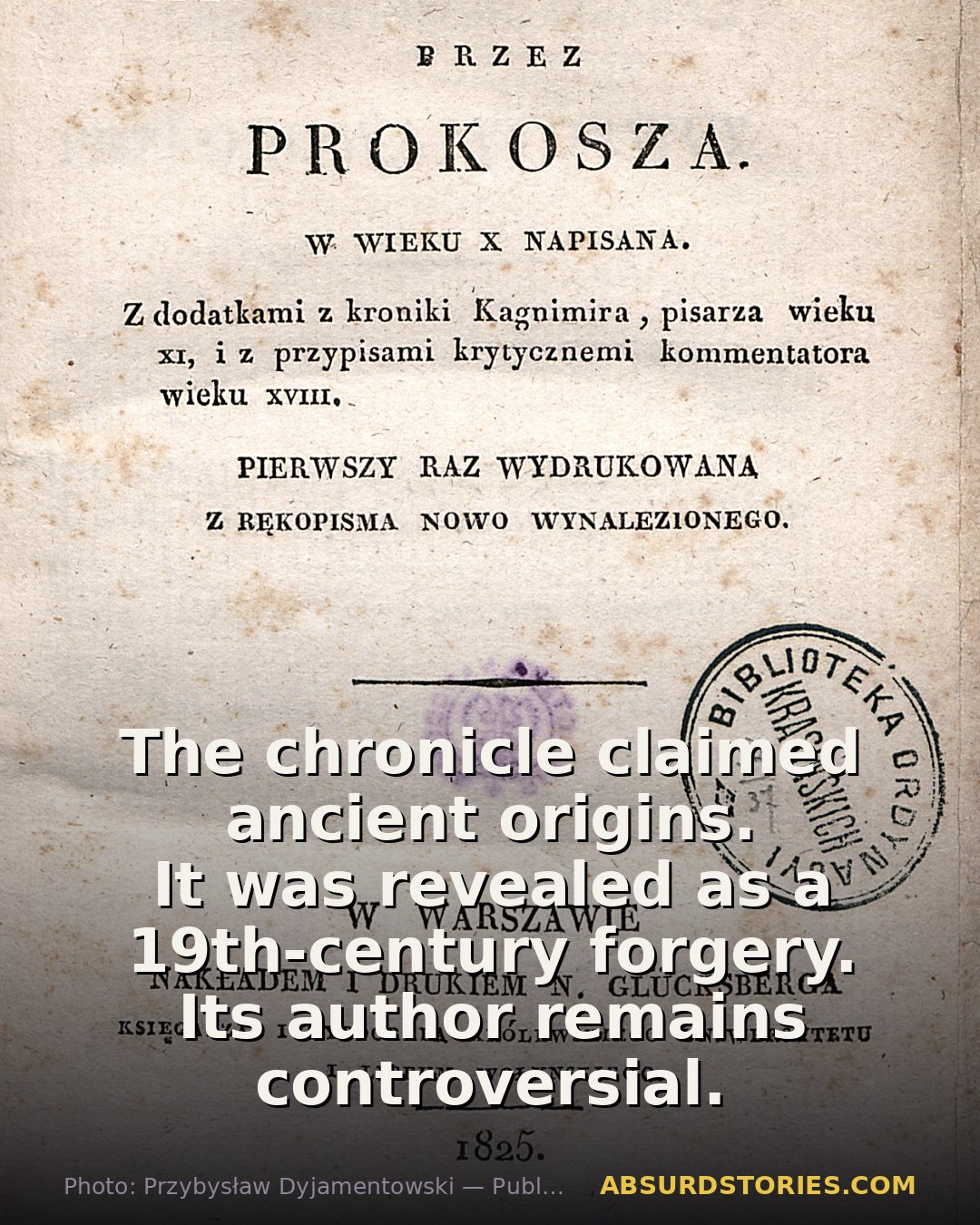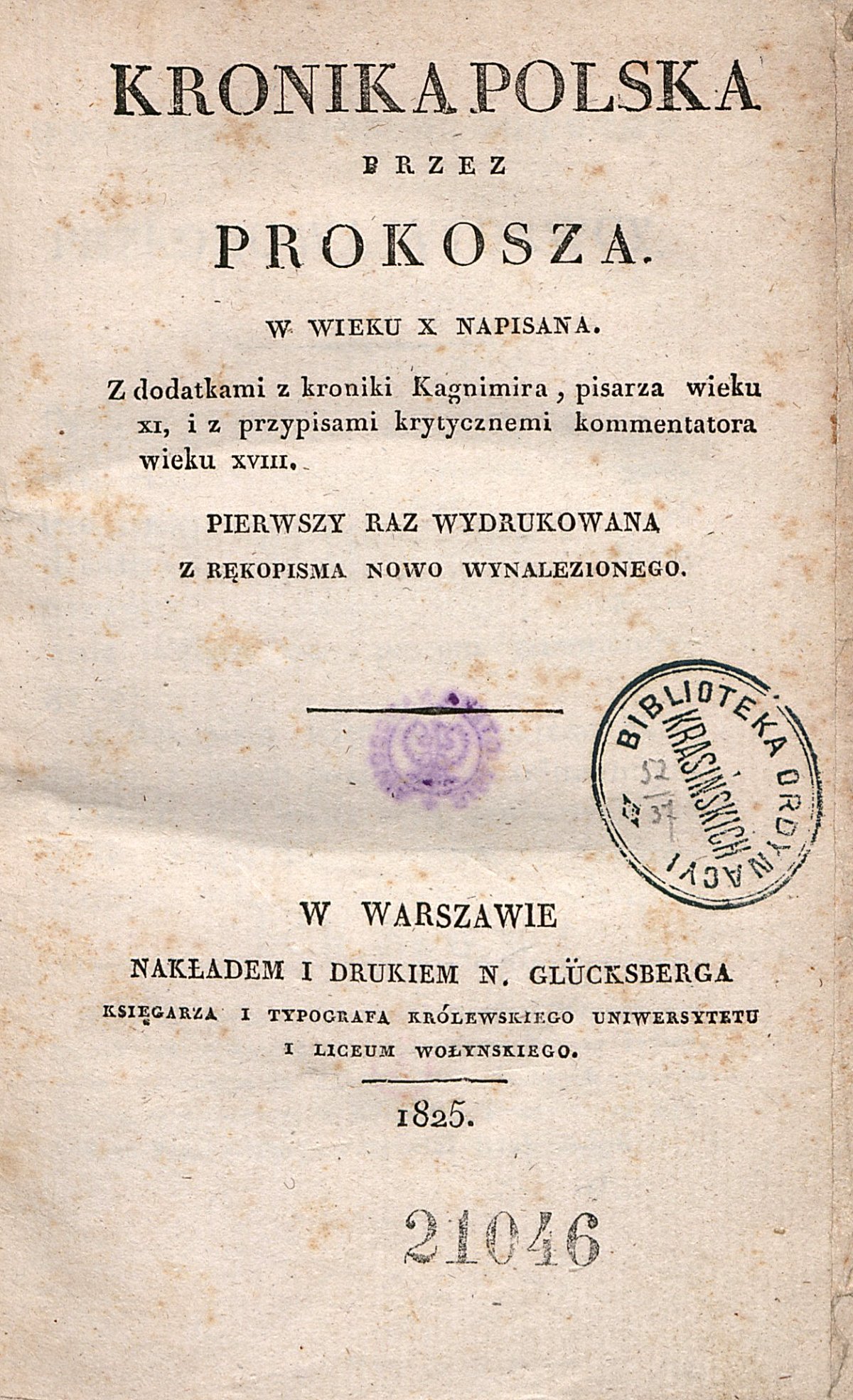
The Chronicle of Prokosz was presented as a historical document from Poland's early days. Its supposed author, Prokosz, was depicted as the first Archbishop of Kraków. However, no reliable evidence supports his existence.
Initially printed in 1825, the chronicle was believed to detail events from the 10th century. It was quickly exposed as a forgery by Joachim Lelewel, who identified its actual author as Przybysław Dyamentowski, known for fabricating historical documents.
The manuscript's dubious origins began when General Franciszek Morawski allegedly acquired it from a market. He presented it to Julian Ursyn Niemcewicz, who was convinced of its authenticity. The work was published shortly thereafter, but its true nature soon came to light.
Despite the quick debunking, interest in the chronicle persists, particularly among proponents of fringe theories about ancient Poland. Questions about the authorship remain, with some suggesting Morawski created the document as a joke.
To this day, the existence of Prokosz and the authenticity of the Chronicle of Prokosz continue to fuel academic debate. The story illustrates how easily misinformation can take root and shape historical narratives.
What began as a fabricated tale of Poland's origins became a point of contention in the nation's historiography.