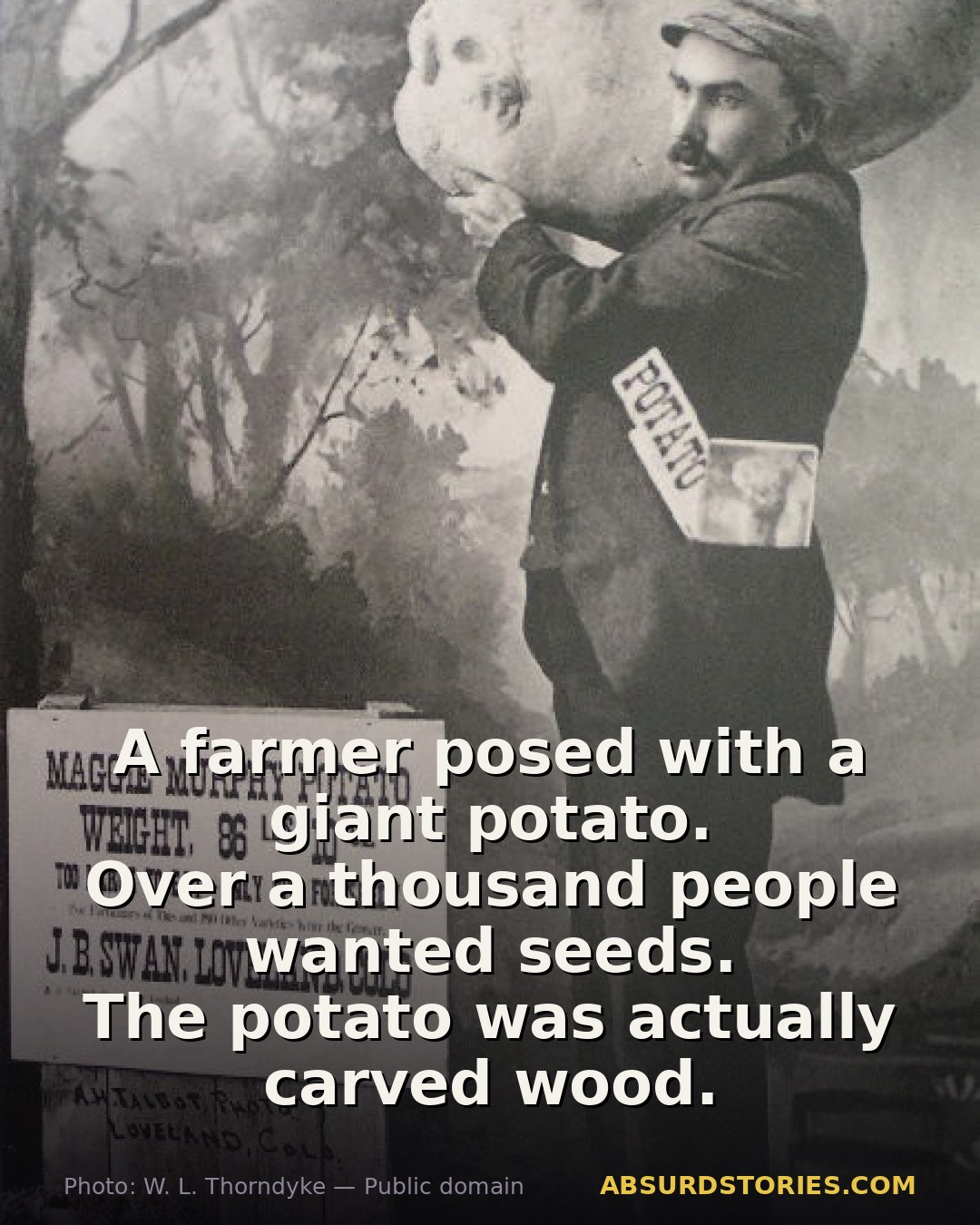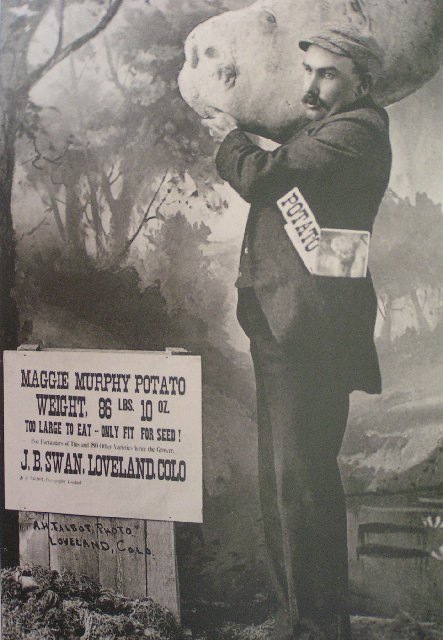
In 1895, a unique hoax captured the attention of many across the United States. A photo emerged, showing a farmer seemingly holding a gigantic potato that weighed nearly 87 pounds. This image was the brainchild of W. L. Thorndyke, the editor of a local newspaper in Loveland, Colorado.
Thorndyke wanted to promote an upcoming street fair and thought of featuring farmer Joseph B. Swan, known for his impressive potato crops—over 70 varieties. With the assistance of local photographer Adam Talbot, they orchestrated the photograph that would soon go viral.
The photo was published in the Loveland Reporter, claiming that the oversized potato measured 2 feet 5 inches. People were captivated. Over a thousand letters flooded into Thorndyke's office from citizens eager to obtain seeds to grow their own version of the potato, which they named Maggie Murphy.
As the requests piled up, it became clear that the hoax spiraled beyond Thorndyke's control. Eventually, he confessed that the potato was not real. Swan had merely carved a wooden replica. The revelation didn't diminish the image's fame; it continued to circulate, appearing in reputed publications such as Scientific American and Ripley's Believe It or Not!.
The hoax left a cultural mark, inspiring a two-act play titled The Great Loveland Potato Hoax in 2012. The story of Maggie Murphy, the giant potato, remains a curious episode in the annals of American folklore.