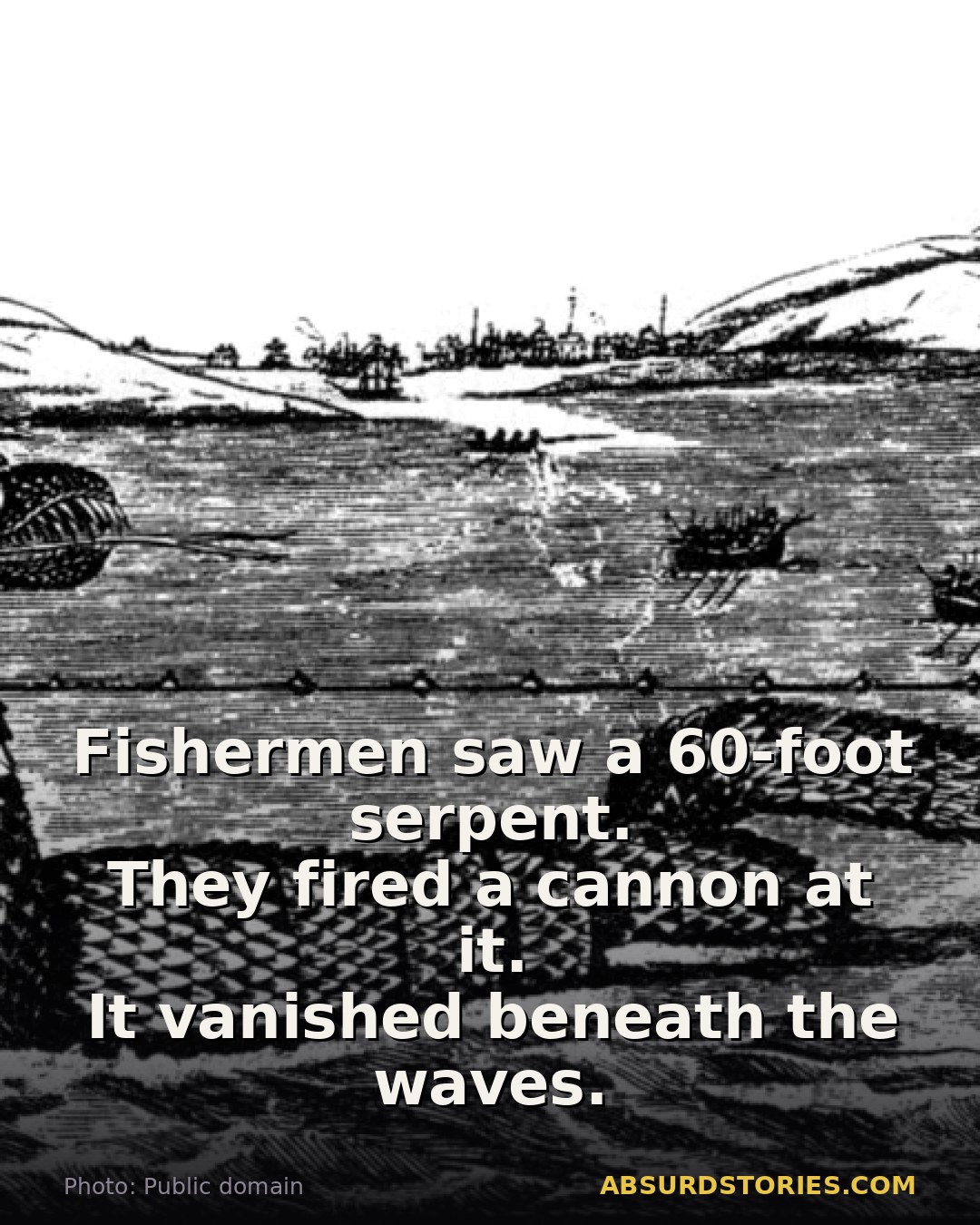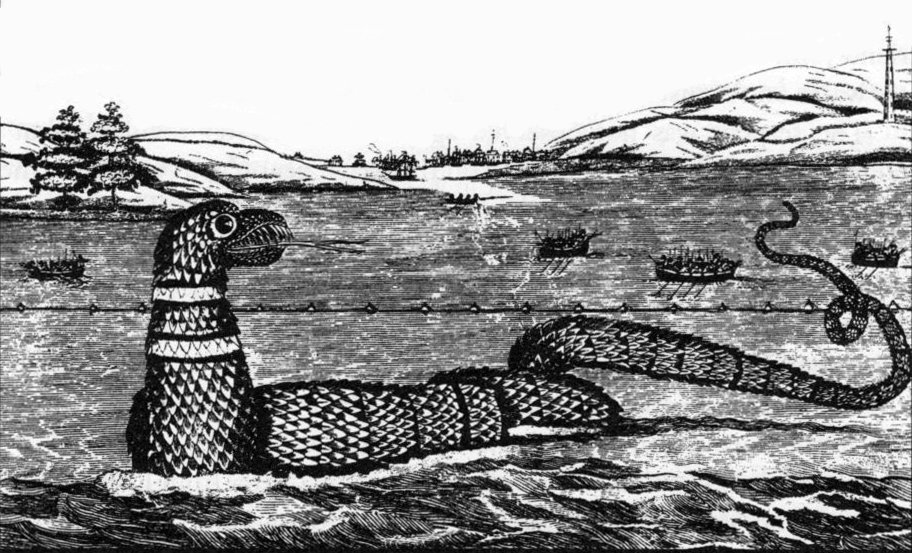
In the late 1810s, fishermen off the coast of Gloucester reported encounters with a massive serpent-like creature. The sightings reportedly began in August 1817, when a group of fishermen reportedly saw a 60-foot beast swimming in the waters. This creature, described as having a head resembling that of a turtle, became a local legend.
One of the most notable encounters occurred when the crew of the schooner "Caravan" saw a large, hump-backed animal swimming alongside their vessel. In an attempt to defend themselves, they fired a cannon at the creature, but it disappeared without a trace.
Throughout the 19th century, numerous sightings were reported, with fishermen and sailors sharing stories of their experiences. Descriptions of the Gloucester Sea Serpent varied widely, leading to speculation about its true nature. Some witnesses described it as long and snake-like, while others saw a creature with a horse-like head or even resembling a dinosaur.
Despite the extensive documentation of sightings, the existence of the Gloucester Sea Serpent remains a topic of debate. Some theories suggest it may have been misidentified marine animals or even a hoax. In 2023, a new explanation emerged, proposing that the sightings of sea serpents could be attributed to harpooned sperm whales entangled with their hunters’ overturned boats.
While the legend of the Gloucester Sea Serpent has become part of local folklore, businesses in the area have not capitalized on it as much as those surrounding similar legends, like Champ of Lake Champlain. The stories continue to capture the imagination, with many still intrigued by the possibility of a creature lurking beneath the waves.