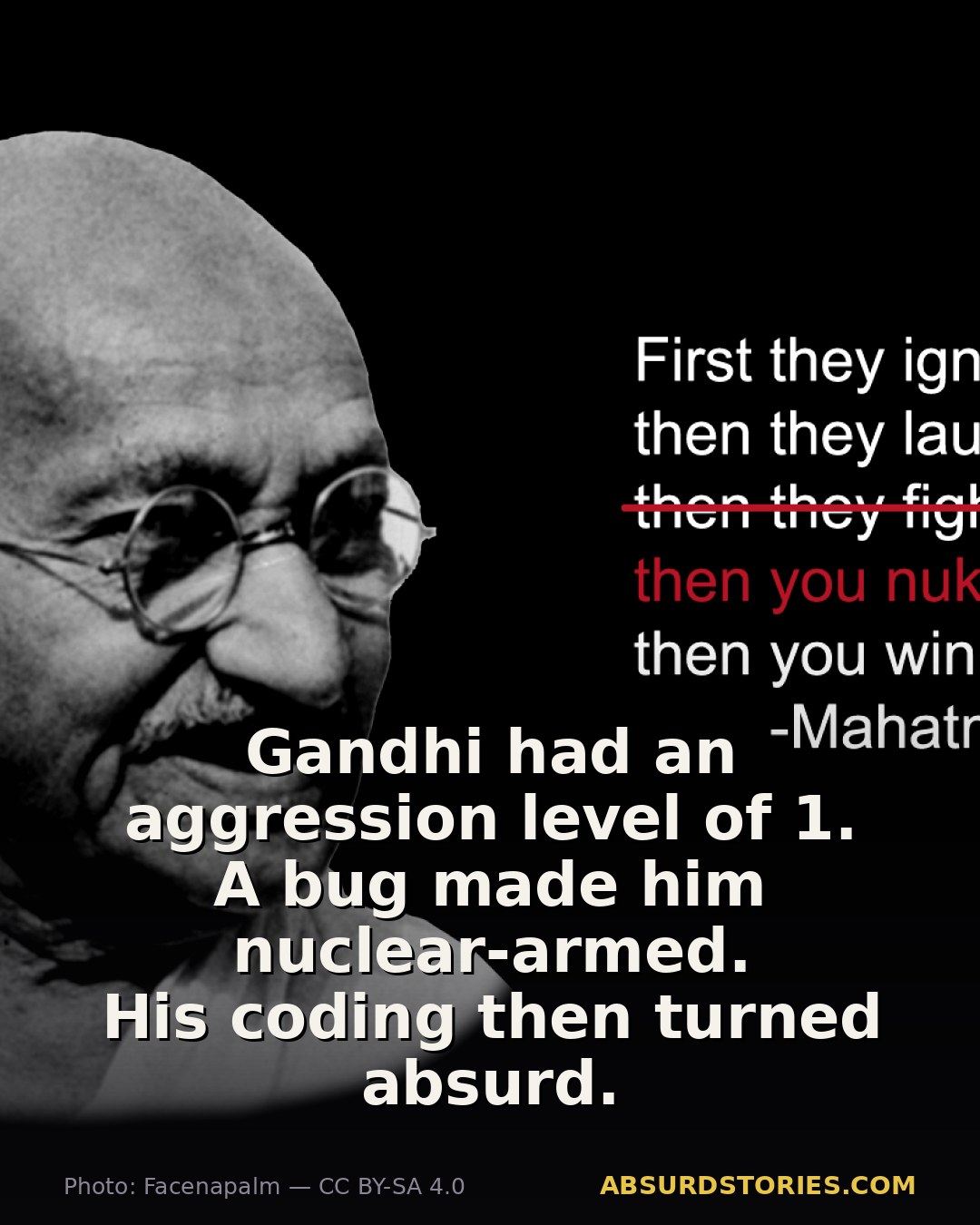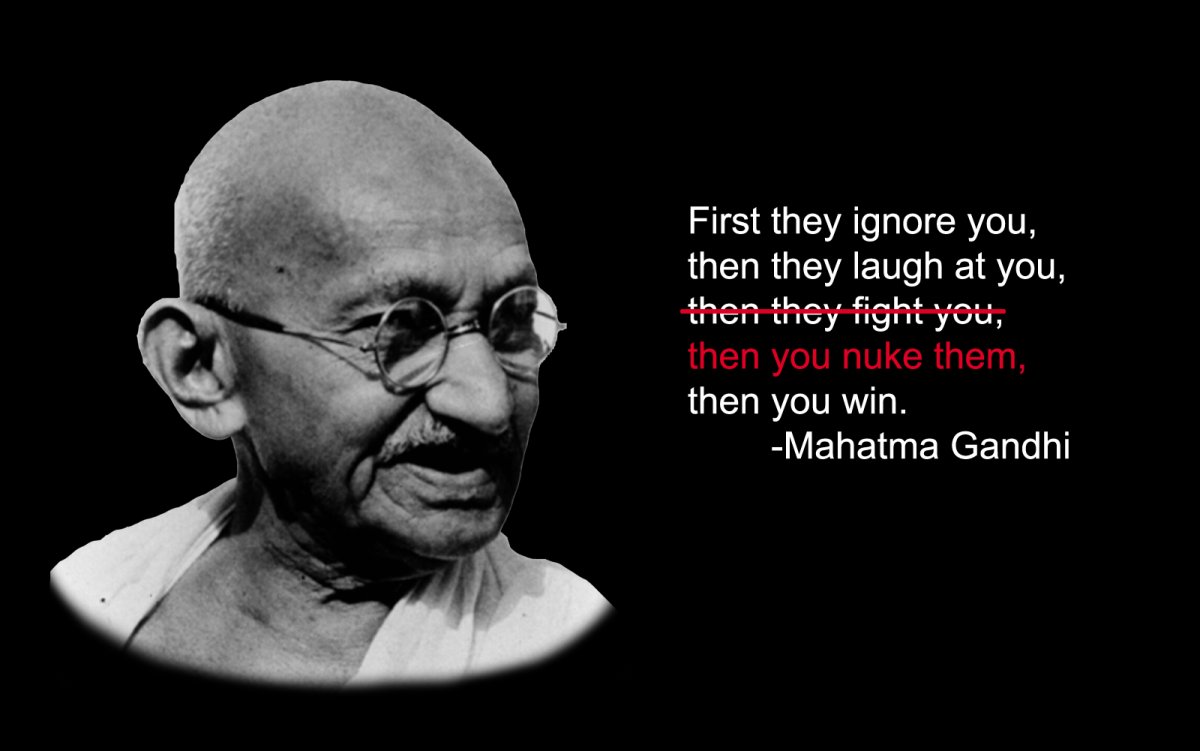
The story of Nuclear Gandhi is a captivating urban legend rooted in the world of video games. In the 1991 strategy game Civilization, Mahatma Gandhi was programmed with the lowest aggression rating possible. This was believed to set him apart as a peace-promoting leader.
According to the legend, when Gandhi transitioned to a democracy in the game, his aggression level would decrease further, supposedly resulting in a negative value. This negative rating was said to trigger an integer overflow bug, transforming Gandhi into a fiercely aggressive leader who would launch nuclear attacks on other civilizations.
This fantastical narrative persisted for many years. It was discussed widely among gamers and even featured on various gaming forums and websites. The concept of a peaceful leader turning into a nuclear menace was both humorous and shocking, making it a staple example of computer science anomalies.
However, the reality of Gandhi's coding was much more mundane. Developers clarified that there were only a few possible aggression levels in Civilization. Each leader's behavior was limited by their aggression ratings, and Gandhi could not exceed the parameters set for even the most aggressive leaders in the game. The supposed overflow and subsequent nuclear frenzy simply could not occur.
As time progressed, this myth was further examined. The game's creator, Sid Meier, confirmed that the bug was impossible in the original Civilization, debunking the long-standing belief that Gandhi was a nuclear threat due to coding errors.
In 2010, however, the misunderstanding found new life in Civilization V. The lead designer decided to assign Gandhi the highest aggression values for nuclear weapon strategies as a playful joke, resulting in players encountering the character's absurdly aggressive behavior once again.
Despite Gandhi's peaceful portrayal, the game allowed for a humorous interpretation of his character when players saw him engaging with nuclear technology far beyond what one would expect from a historical figure known for non-violence.
This entire saga illustrates how easily a coding quirk can evolve into a legendary story. It reflects both the imagination of gamers and the unpredictable nature of software programming, turning a peaceful leader into a video game icon of absurdity.