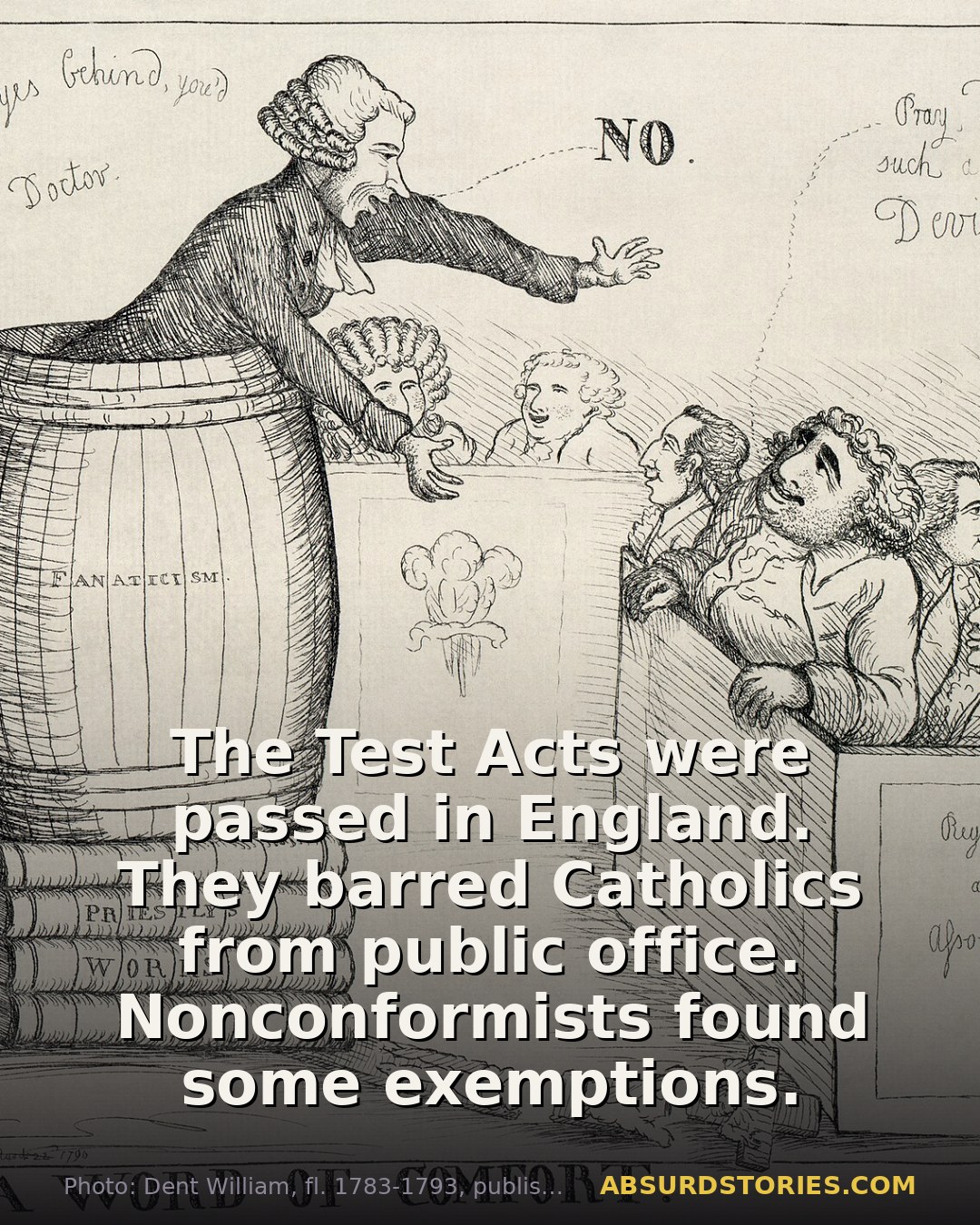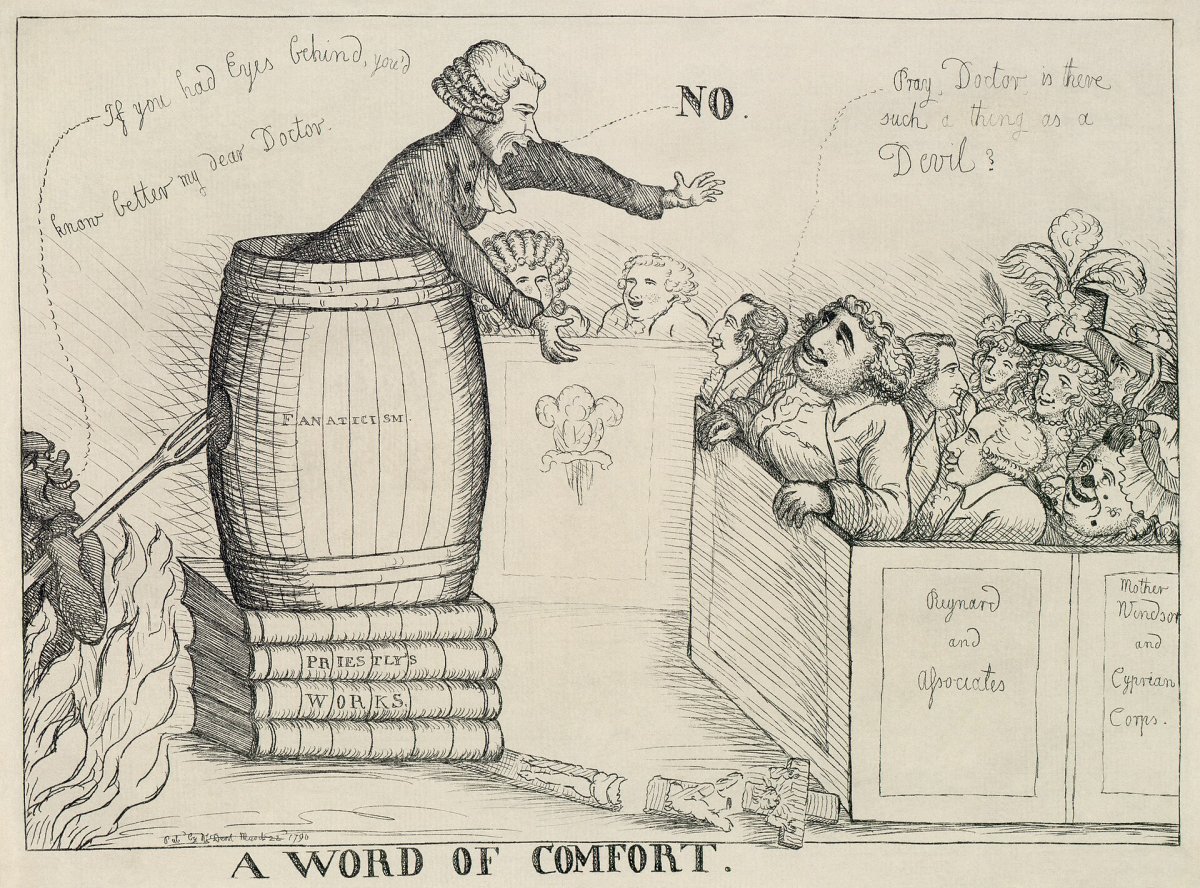
The Test Acts were a series of laws in England that created a religious test for public office. They primarily targeted Roman Catholics and nonconformist Protestants. Only those who took communion in the Church of England could hold public positions.
The first of these acts came from the Corporation Act of 1661, which required municipal authorities to receive the sacrament according to Anglican rites. This was largely aimed at excluding nonconformists who had become more prominent after the English Civil War.
The Test Act of 1673 followed, mandating that all public officials had to declare their rejection of transubstantiation and receive communion within three months of taking office. This act was passed during a parliamentary session that began in February 1673, with significant political motivations behind its enactment.
In 1678, the Test Act was expanded to include peers and members of the House of Commons. This was intended to prevent Catholics from influencing government, stemming from fears surrounding the alleged Popish Plot. The Lords resisted this change, weakening the act by allowing exemptions for certain peers.
Similar regulations appeared in Scotland and Ireland, reflecting a broader trend of penal laws supporting the Protestant Ascendancy. These laws were not only about religious belief but also about power and control within the political landscape.
The Test Acts ultimately served to create divisions and enforce conformity. They exemplified how religious belief could dictate political participation in England.