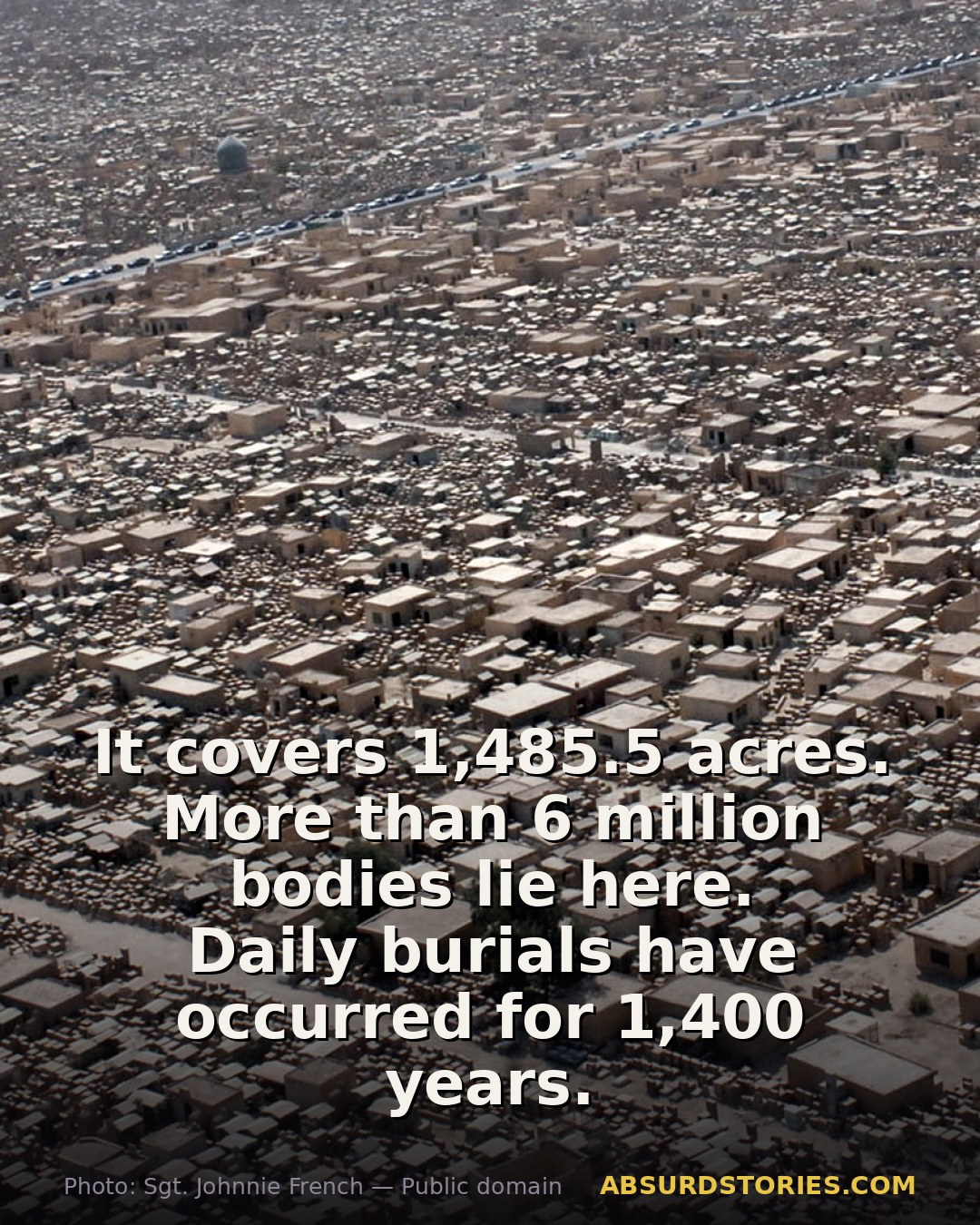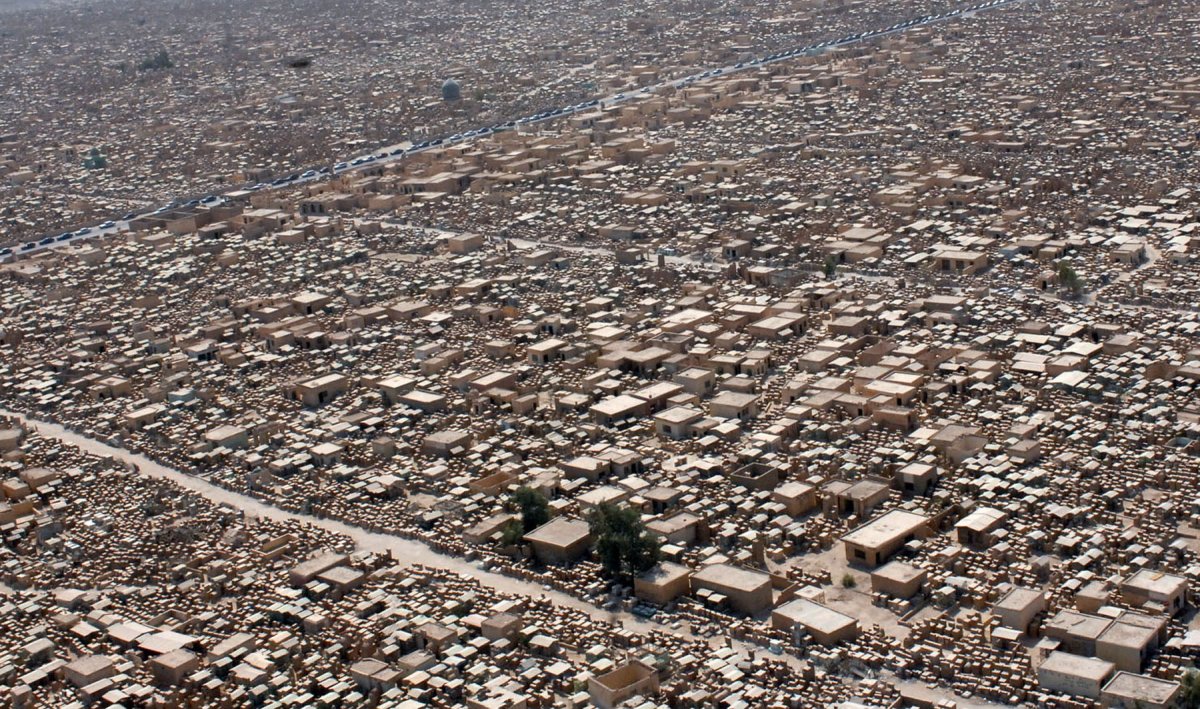
Wadi-us-Salaam, located in Najaf, Iraq, is recognized as the largest cemetery in the world. It spans an enormous 1,485.5 acres and is home to over 6 million graves. This cemetery not only serves local Shi'ite communities but attracts millions of pilgrims from around the globe who wish to be buried there.
Its significance is deeply rooted in Islamic tradition. Many Shi'ites believe that burial in Wadi-us-Salaam is a pathway to intercession by Ali ibn Abi Talib, the first Shia Imam. The tradition holds that those buried here will be resurrected on judgment day alongside their spiritual leader. This belief has led to a continuous demand for burial plots, particularly as the cemetery has expanded over the years.
Historically, burials have taken place at Wadi-us-Salaam for more than 1,400 years, with records suggesting such practices date back to ancient Mesopotamia. The site saw significant conflict during the Iraq War, with daily burials peaking at up to 250 during the height of violence. Although this number decreased to less than 100 in 2010, the cemetery continues to receive approximately 50,000 new bodies each year.
As of 2014, the cemetery faced a growing crisis of space. Reports indicated that burial plots were running out, leading to theft and illegal resale of graves. Gravediggers noted an unprecedented surge in demand, further exacerbating the issue of limited space.
Wadi-us-Salaam remains a powerful symbol of faith, community, and the profound connection between life and death in Shi'ite Islam. The sheer scale and ongoing use of this cemetery challenge the boundaries of belief and the realities of mortality.