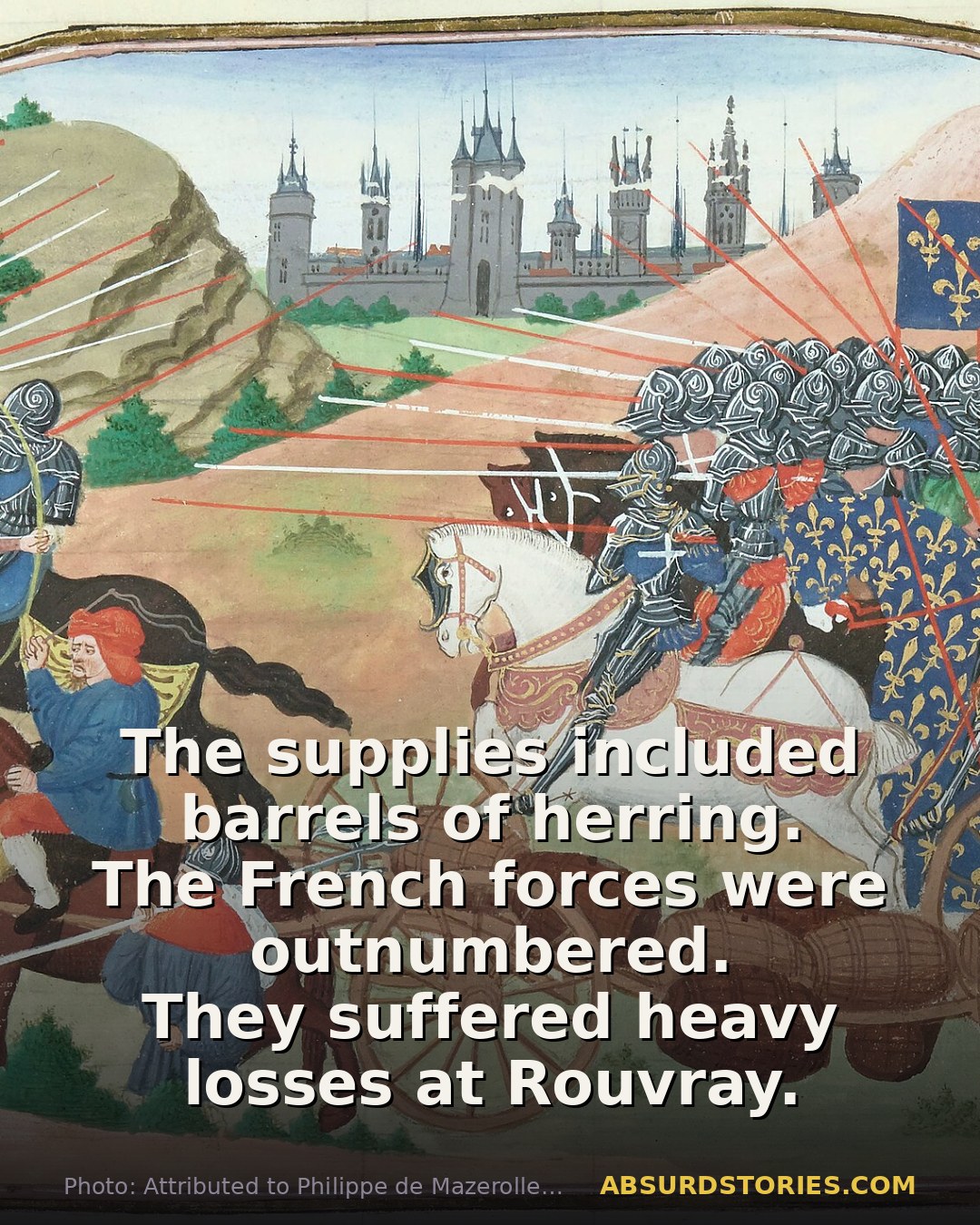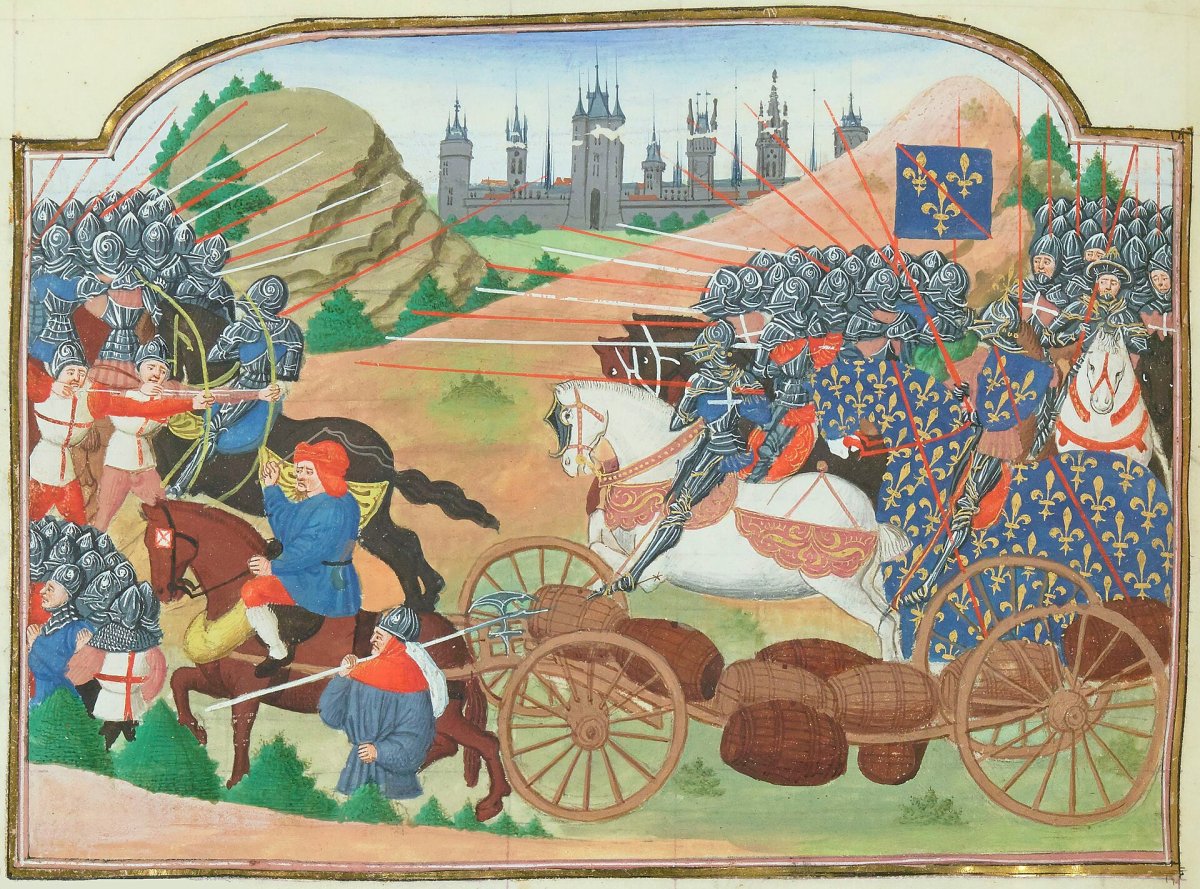
On February 12, 1429, a military confrontation unfolded near Rouvray during the siege of Orléans. French and Scottish forces attempted to intercept a supply convoy headed for the English army. The convoy included not only military equipment but also barrels of herring, intended for Lent.
The battle became known as the Battle of the Herrings, a name derived from this unusual cargo. The French army, numbering between 3,000 and 4,000, faced a smaller English force that had fortified their position with supply wagons and stakes to deter cavalry charges.
Despite initial artillery bombardments by the French, a premature attack by Scottish infantry disrupted their strategy, leading to significant casualties. French cavalry attempted to support the Scots but were halted by the English archers and defensive stakes.
The English forces launched a counterattack as the French troops faltered. They flanked and routed the disorganized French and Scottish soldiers, securing their supply convoy and reinforcing the besieging English army.
The aftermath of the battle had profound effects on morale and strategy. The French suffered losses, including a key Scottish leader, while the besieged city of Orléans faced a low point in its resistance efforts. The failure of the French to capitalize on their artillery bombardment was seen as a key factor in their defeat.
This military action, while seemingly minor, played a crucial role in the broader historical context of the Hundred Years' War. It contributed to the desperate situation in Orléans, leading to Joan of Arc's eventual involvement. The battle's significance extended beyond its immediate consequences, influencing the course of the siege and the events that followed.