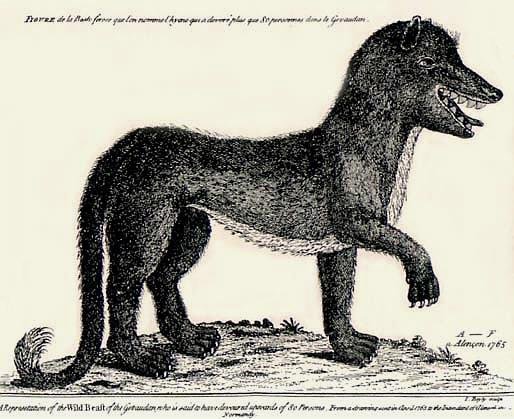
Between 1764 and 1767, a predator haunted the Gévaudan region of France. Eyewitness accounts describe it as a massive creature with tawny fur and dark stripes, larger than a wolf. It was said to attack with powerful teeth and claws, targeting the head and neck of its victims.
The terror began in the summer of 1764 when the beast struck a young woman tending cattle. This incident marked the start of many attacks, with the first confirmed victim being a 14-year-old girl, Jeanne Boulet. The subsequent wave of deaths spurred panic throughout the region.
As the beast continued its rampage, the number of reported attacks escalated. Estimates suggest that it was responsible for at least 113 deaths and numerous injuries, with many victims being partially consumed. The creature’s presence was so fearsome that some claimed it exhibited unnatural abilities, such as leaping great distances and evading bullets.
In December 1764, speculation arose that multiple beasts might be involved, as attacks occurred almost simultaneously in different locations. The local bishop deemed the creature a divine punishment, calling for prayers and penance to combat this scourge.
Despite royal intervention and the allocation of resources to hunt the animal, the killings persisted. A group of children managed to fend off an attack in early 1765, drawing the attention of King Louis XV, who promised rewards for those involved in the hunt.
The story of the beast spread beyond France, with European media mocking the inability of the authorities to capture it. As the situation unfolded, various eccentric suggestions poured in from across the country, attempting to provide solutions to the ongoing crisis.
Eventually, several creatures believed to be the beast were killed, yet the attacks did not cease immediately. The identity of the Beast of Gévaudan remains a mystery, a haunting tale of fear and failure that lingers in the annals of history.