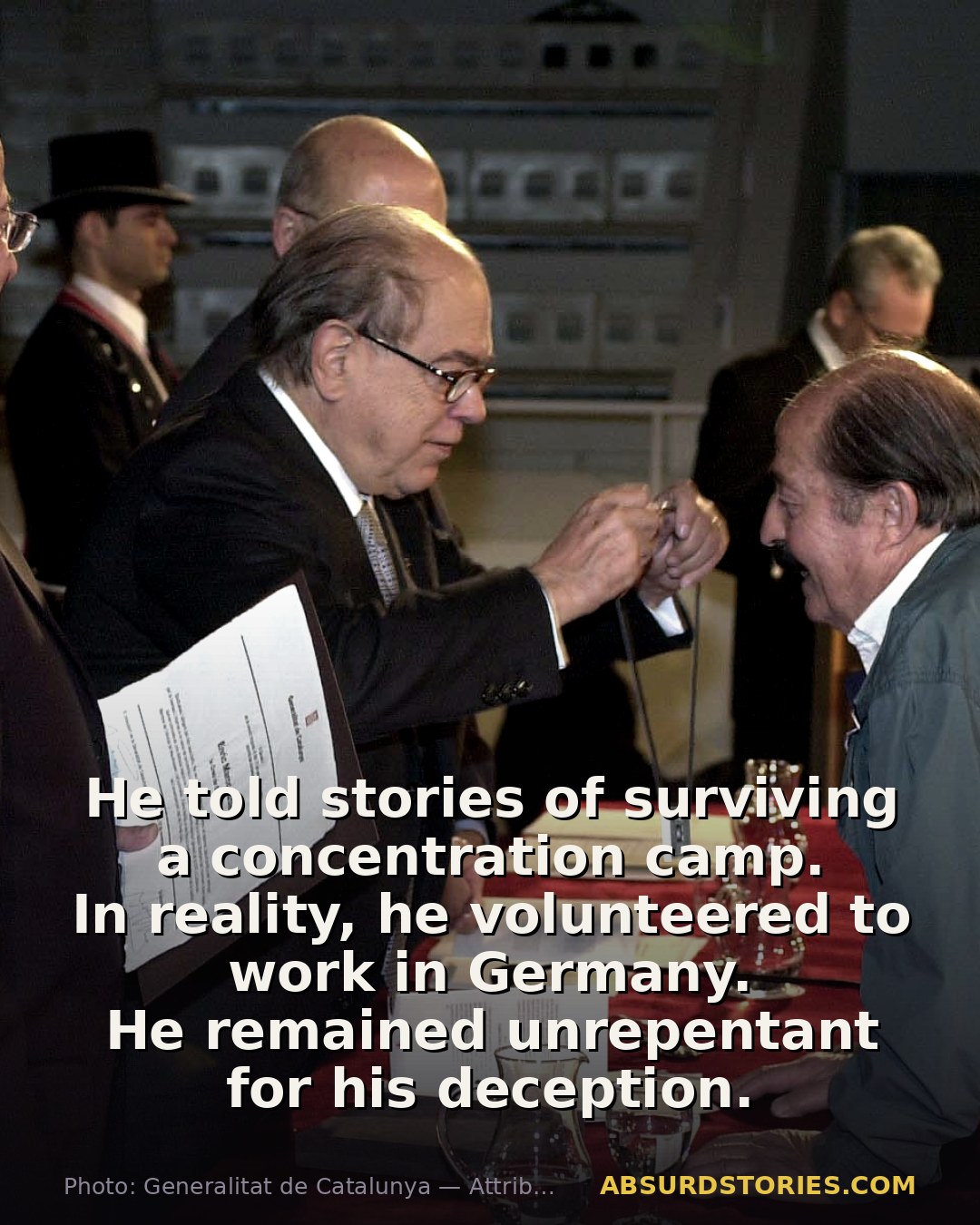
Enric Marco claimed to be a Holocaust survivor, having told harrowing tales of his imprisonment in the Flossenbürg concentration camp. However, he was never interned in any camp. Born in Barcelona in 1921, Marco volunteered to emigrate to Nazi Germany as a foreign worker during World War II.
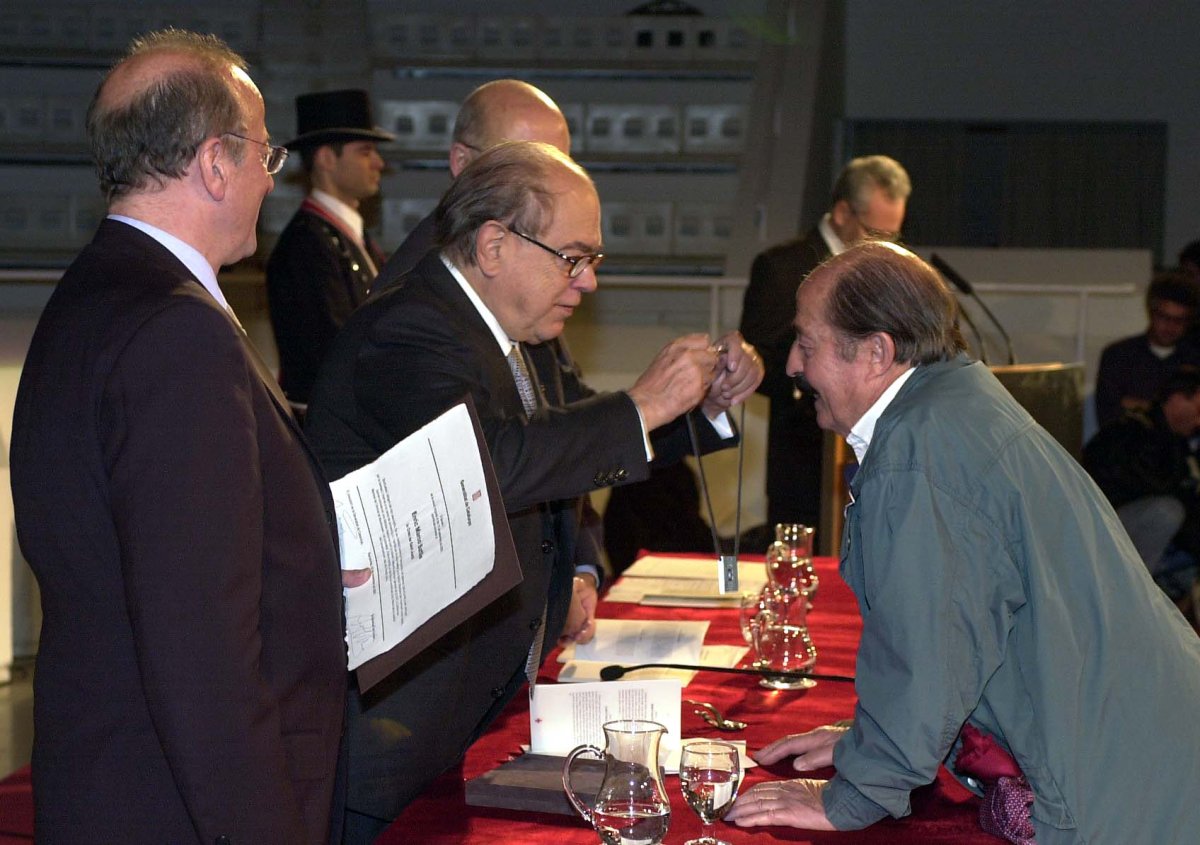
For decades, Marco recounted dramatic stories of fleeing Barcelona and being captured by Nazis, only to end up in a concentration camp. His narrative gained traction and garnered him awards, including the Creu de Sant Jordi from the Catalan government. As president of the Amical de Mauthausen, he gave emotional speeches, captivating audiences with his fabricated experiences.
By 2005, doubts began to surface regarding the authenticity of Marco's claims. Survivors and historians questioned the details of his story. An investigation revealed that Marco had volunteered to go to Germany, contradicting his assertions of being deported and incarcerated. This led to a public confrontation where Marco admitted his deception.
Despite the fallout, Marco never expressed remorse for his lies. He justified his actions as efforts to honor the memory of real victims of Nazism. However, many survivors felt betrayed, arguing that his fraud undermined their true experiences and fueled Holocaust denial.
Marco's life continued to be scrutinized, culminating in a documentary and biographical works that explored his audacious claim. He died in 2022, leaving behind a complicated legacy that raised profound questions about memory and authenticity.