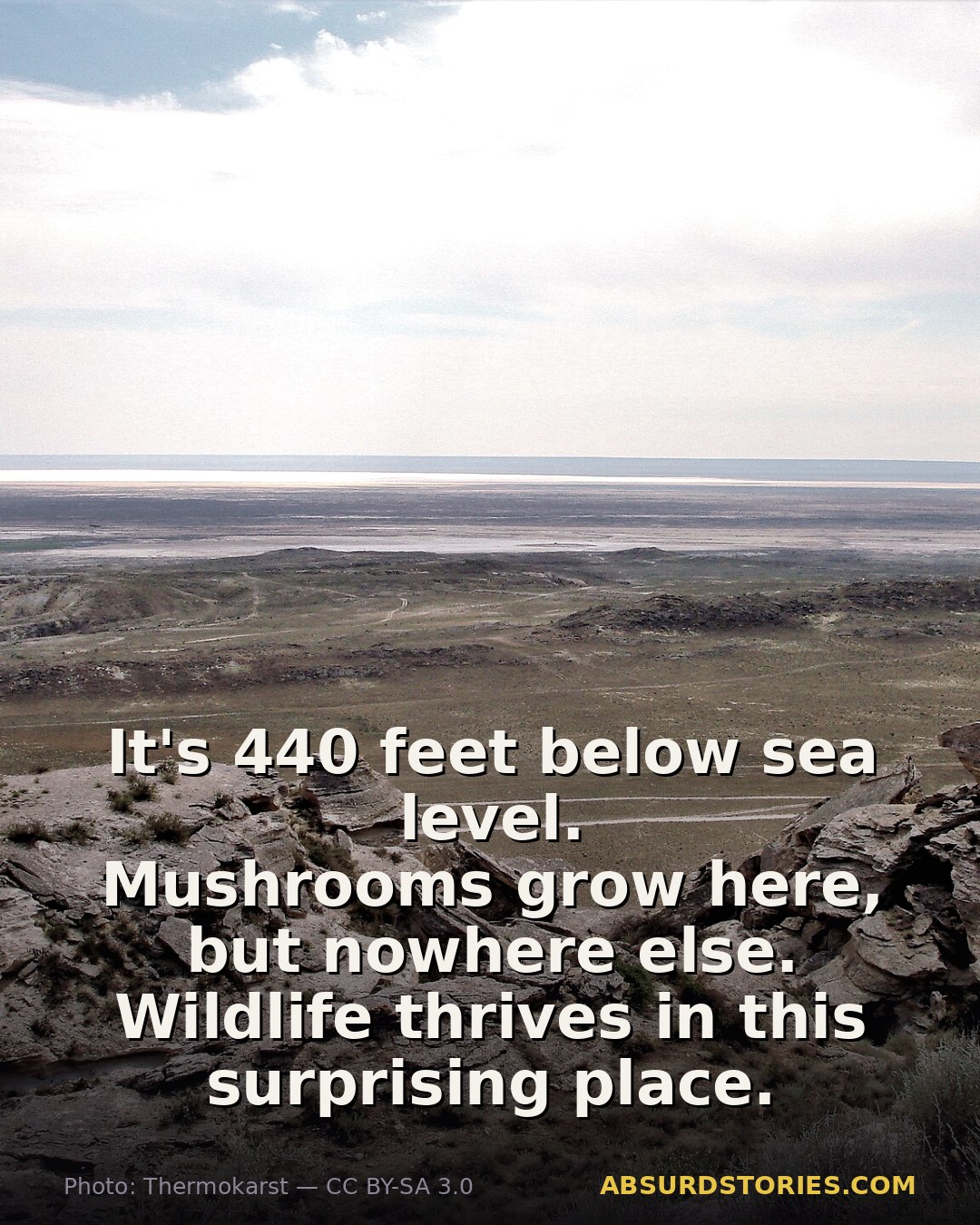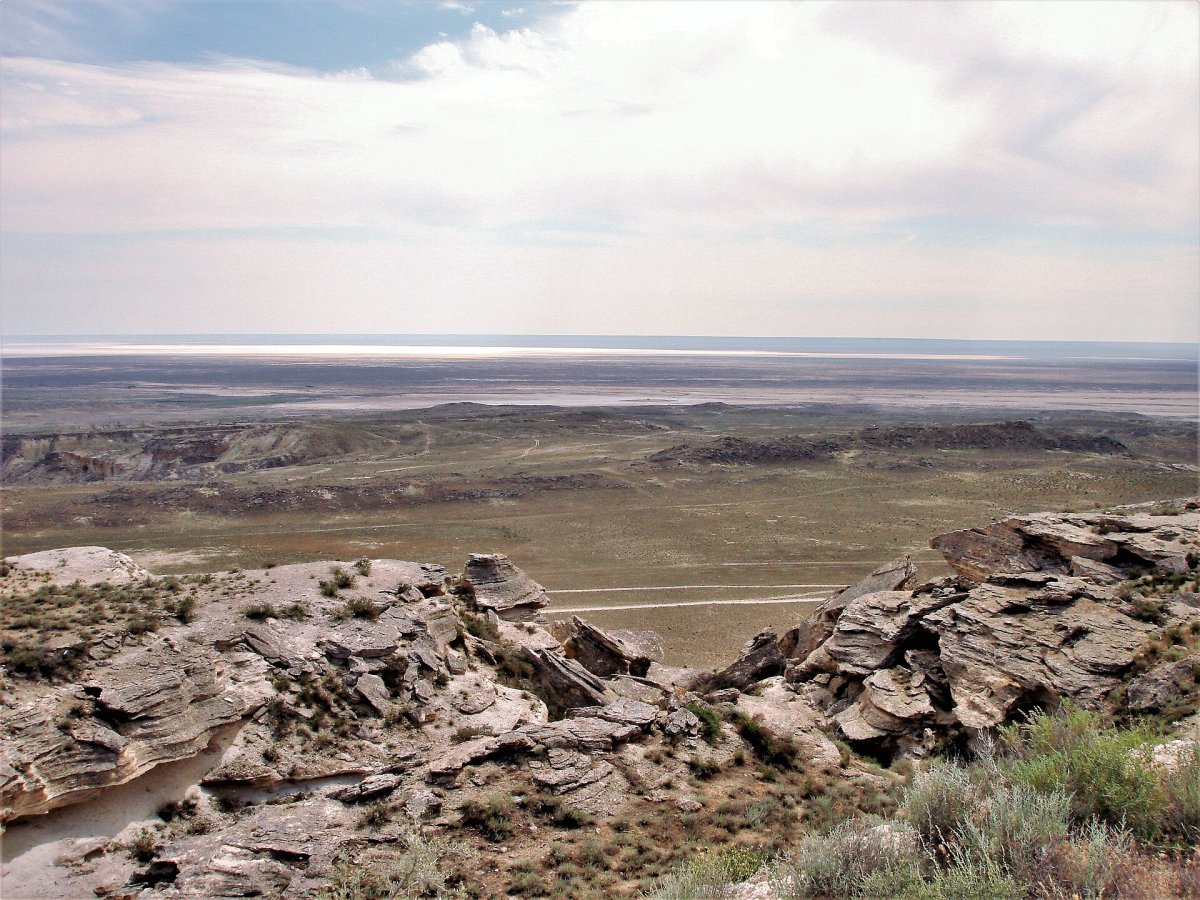
At the lowest depths of Central Asia lies a remarkable geological anomaly known as Karagiye. This karst trench, extending 40 kilometers, plunges 440 feet below sea level, making it the most depressed area in Kazakhstan and the former Soviet Union.
Karagiye was shaped by the natural processes of erosion, where soluble materials like limestone and gypsum dissolved over time, resulting in a series of potholes, funnels, and caves that eventually led to its current form. The trench's unique structure plays a role in creating long rain clouds due to the air currents rising above it.
Despite its harsh environment, Karagiye is home to a variety of wildlife including mouflon, corsac, snakes, hares, and vultures. What is particularly surprising is that this trench is the sole location on the Mangyshlak Peninsula where mushrooms can be found. Local residents venture into the area to collect these rare fungi.
In addition to its biological diversity, Karagiye features a vernal lake in its south-western section, alongside a mysterious stream that emerges from a drilled well only to vanish back into the ground within the trench.
The coexistence of such unusual natural characteristics in one location makes Karagiye a fascinating study of geological and ecological phenomena.