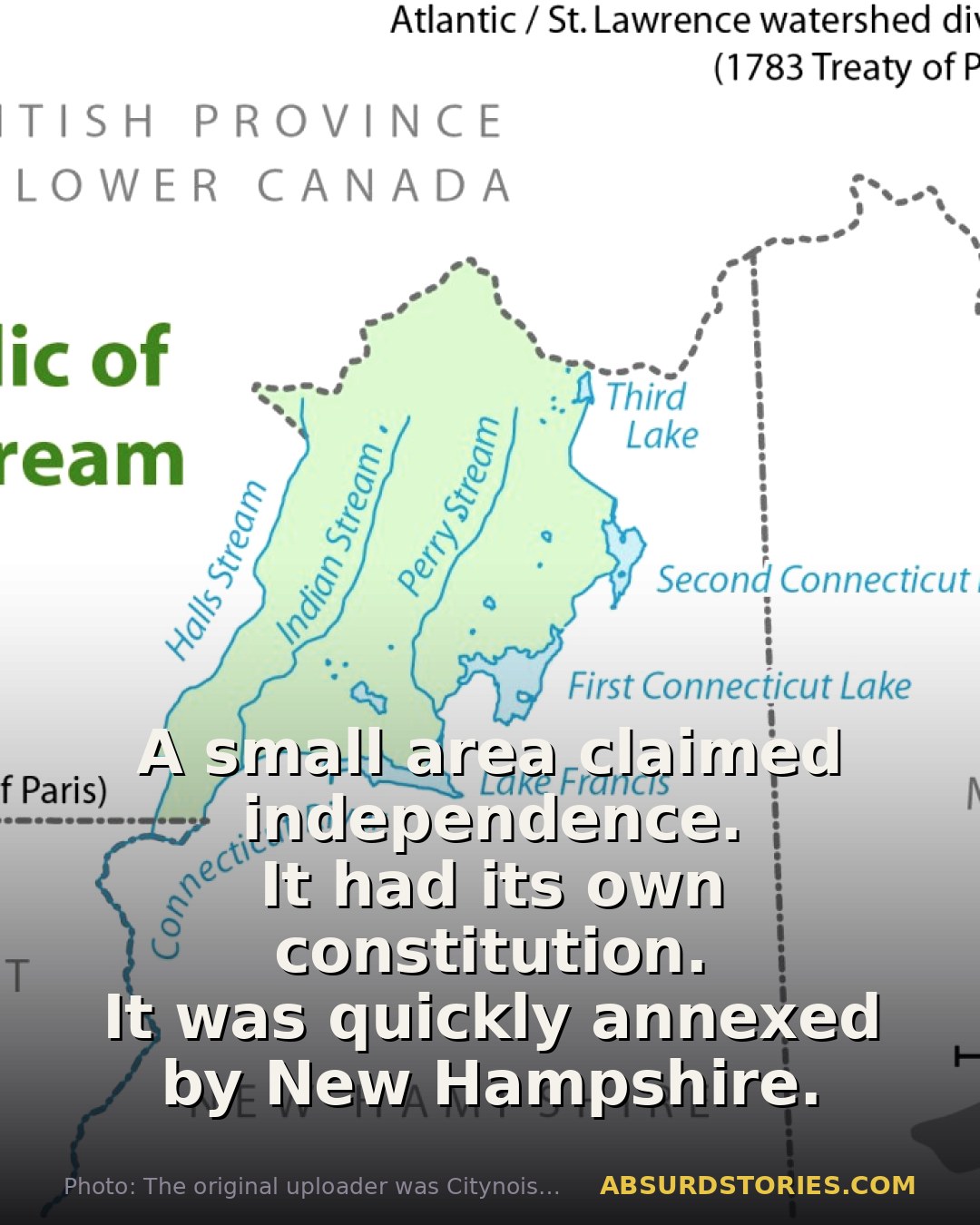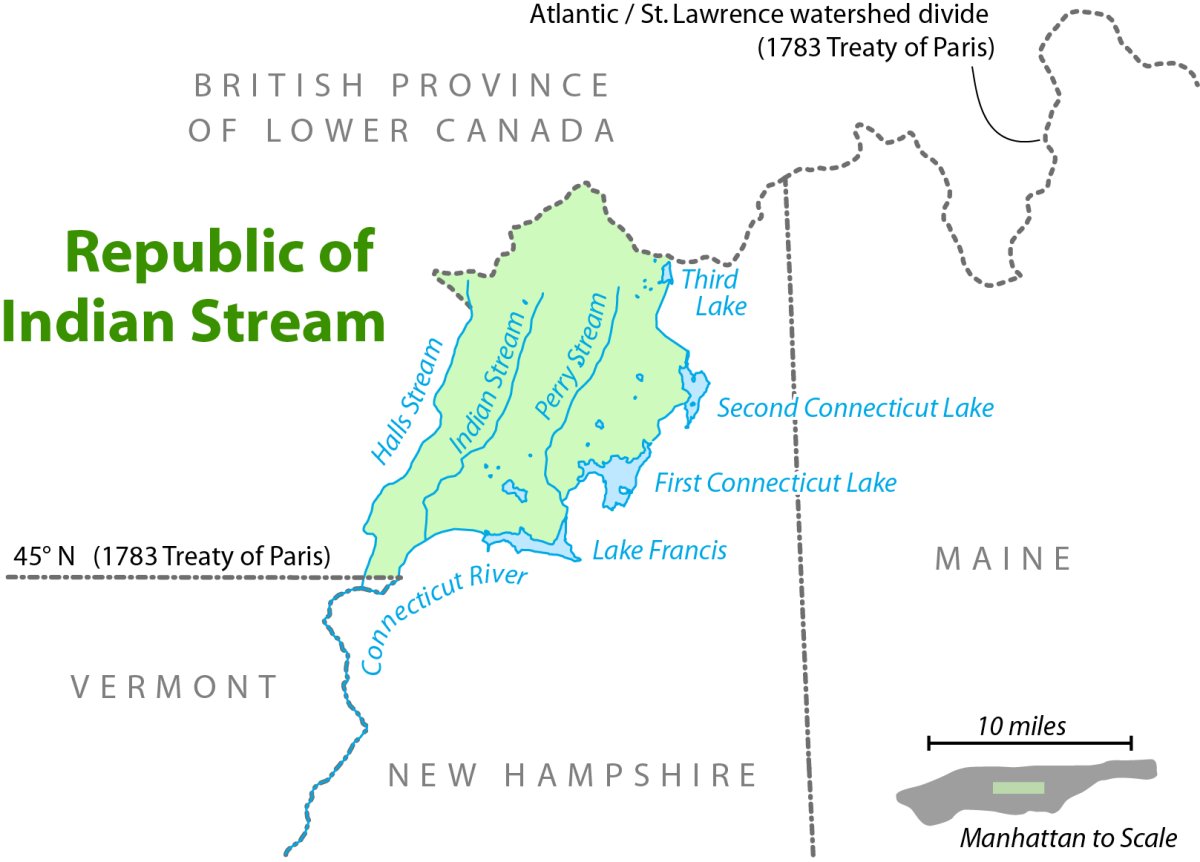
In the early 1830s, a peculiar territory decided to declare itself independent. This area, known as the Republic of Indian Stream, emerged amid a foggy boundary dispute between the United States and British Lower Canada. It existed only from July 9, 1832, to August 5, 1835, but it produced its own constitution and had an organized elected government.
The saga of independence began with land grants tied to historical figures like King Philip, leading to a patchwork of overlapping claims from various groups. After the Treaty of Paris, there was confusion regarding the borders, particularly where the Connecticut River originated. This ambiguity allowed the residents to assert their independence from both nations.
Indian Stream had around three hundred residents who felt caught in a crossfire of taxation from both sides. The local assembly, frustrated by the double taxation, declared independence and sought to govern themselves. They framed their constitution, essentially creating a framework for a sovereign state until clarity on their rightful allegiance could be established.
However, the declaration of independence did not lead to a peaceful existence. The sheriff of Coos County retained his authority and eventually requested the militia to address the situation. By the summer of 1835, tensions escalated, and a confrontation loomed as local militia prepared to march into Indian Stream and enforce order.
Faced with an impending invasion, the assembly members capitulated to the sheriff's ultimatum and agreed to be annexed by New Hampshire. On August 5, 1835, the Republic folded into the state, effectively ending its brief existence. The annexation did not settle the land dispute, leading to further complications, including arrests that sparked skirmishes between factions loyal to either the U.S. or British claims.
The history of Indian Stream serves as a fascinating example of how territorial disputes can lead to the creation of a republic that lasted only a few years, yet captured the imagination of those involved. The ambition of its residents to establish a functioning government highlights the complexities of borders and national identity, even in a remote corner of North America.