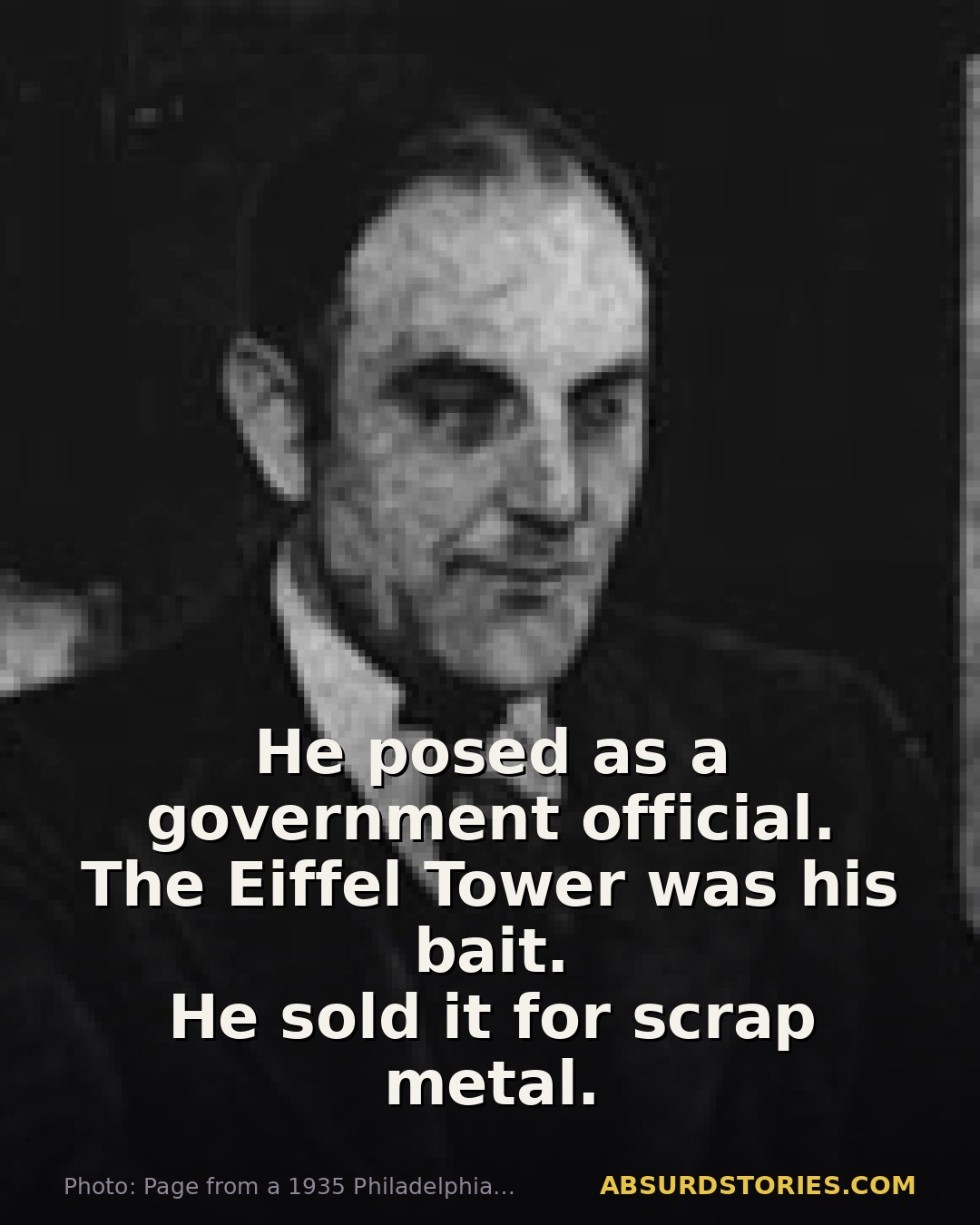
Victor Lustig's most notorious scam involved the Eiffel Tower. He managed to convince scrap metal dealers that the French government wanted to sell the iconic monument. With a deft mix of charm and deception, he posed as a high-ranking official to pull off this audacious con.
In 1925, Lustig read an article about the Eiffel Tower's maintenance costs. Inspired, he crafted a plan that hinged on the public perception of the tower. He hired a forger to produce fake government documents to lend credibility to his scheme.
After gathering a small group of scrap metal dealers in a luxurious hotel, he introduced himself as the Deputy Director-General of the Ministry of Posts and Telegraphs. He explained that the government was planning to sell the tower for scrap due to its expensive upkeep and the growing public sentiment against it.
Under the guise of confidentiality, Lustig pitched the sale, convincing the dealers of its legitimacy. They were eager to seize what they thought was a golden investment opportunity. In the end, he successfully sold the Eiffel Tower not once, but twice, before the scam was uncovered.
Lustig's audacity and cunning left a mark on history, solidifying his reputation as one of the most infamous con artists of his time.