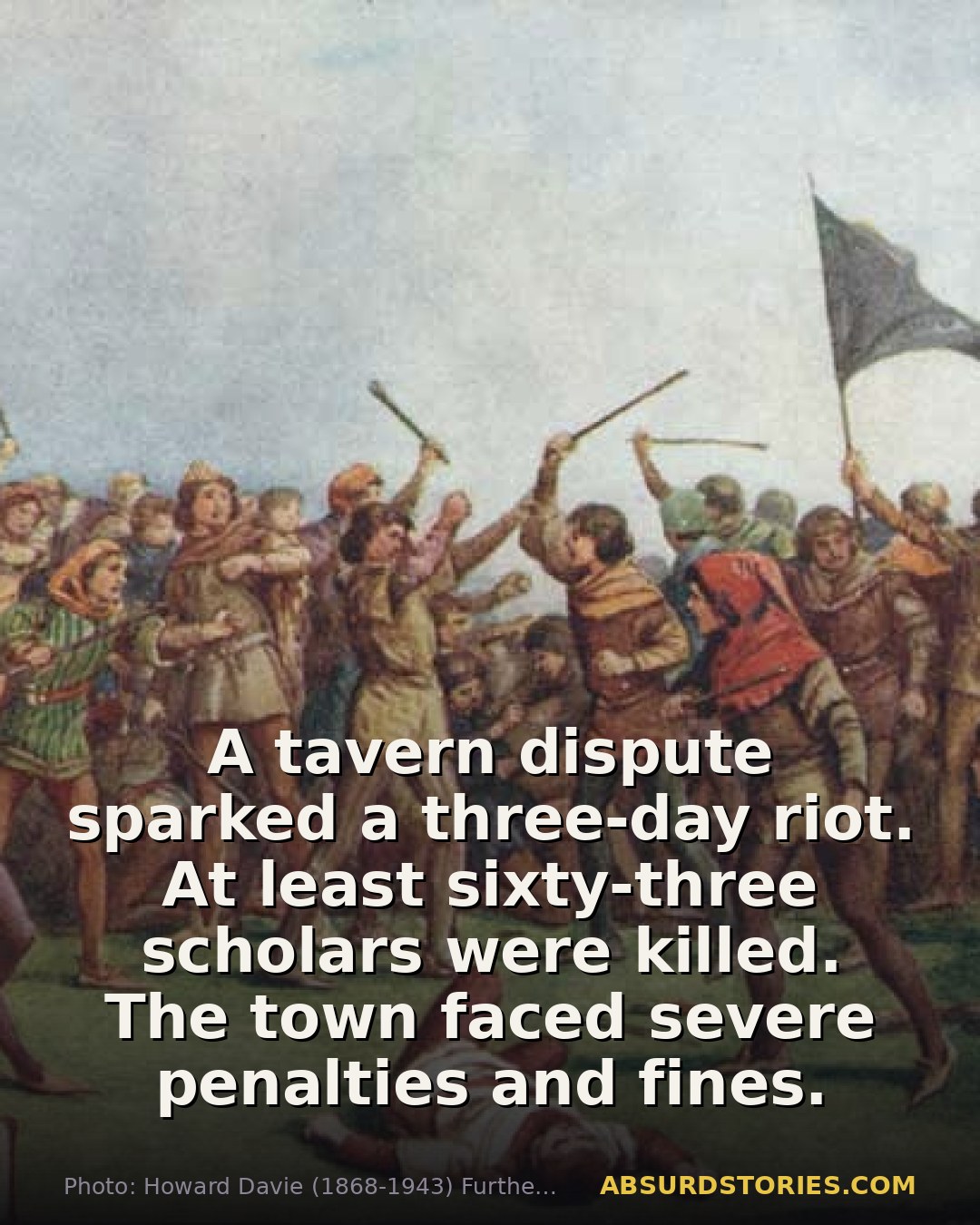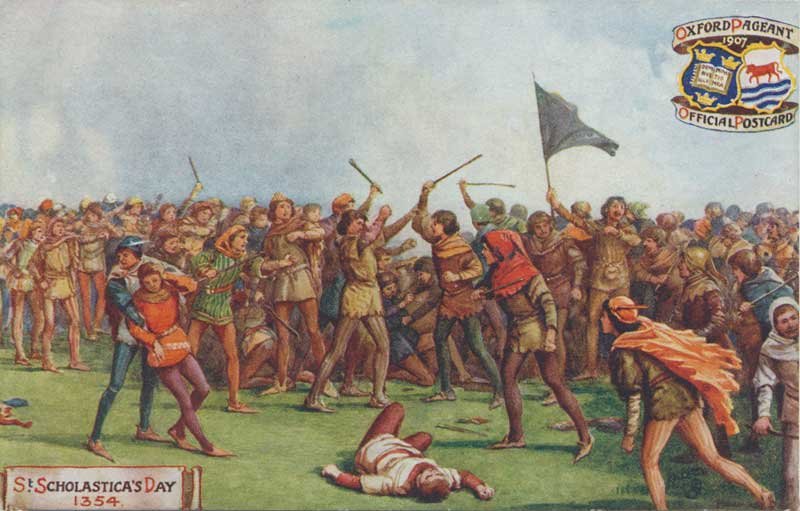
The incident began with two university students dissatisfied with the quality of wine served at a tavern. Their argument quickly escalated into violence, drawing in other patrons and leading to a chaotic scene. Over the next three days, the brawl transformed into a full-blown riot, with armed groups entering the town to support the locals.
The violence resulted in significant casualties. At least twenty townspeople lost their lives, while up to sixty-three members of the university were killed. Many students were attacked in their accommodations, with reports of gruesome acts, including scalpings.
Violence between the townspeople and university students was not uncommon. Prior incidents had occurred, with multiple coroners' courts addressing murders involving students over the years. The tensions had been building for some time, influenced by the overall societal unrest following the Black Death.
In response to the chaos, King Edward III intervened, sending judges to investigate and determine appropriate actions. He sided with the university, resulting in harsh penalties for the town. The town was fined heavily, and its officials were imprisoned, marking a significant shift in power dynamics between the university and the town.
As further punishment, a year-long religious ban was imposed on the town, restricting various practices. An annual penance required town officials to attend a Mass for the victims of the riot, and the town was required to pay a fine for each scholar killed.
Such historical grievances highlight the long-standing tensions between the university and the local population. While the riot was a violent culmination of these tensions, its legacy continued for centuries, culminating in reconciliatory gestures in the mid-20th century. The absurdity lies not just in the riot itself, but in the fact that a simple complaint about wine escalated to such tragedy.