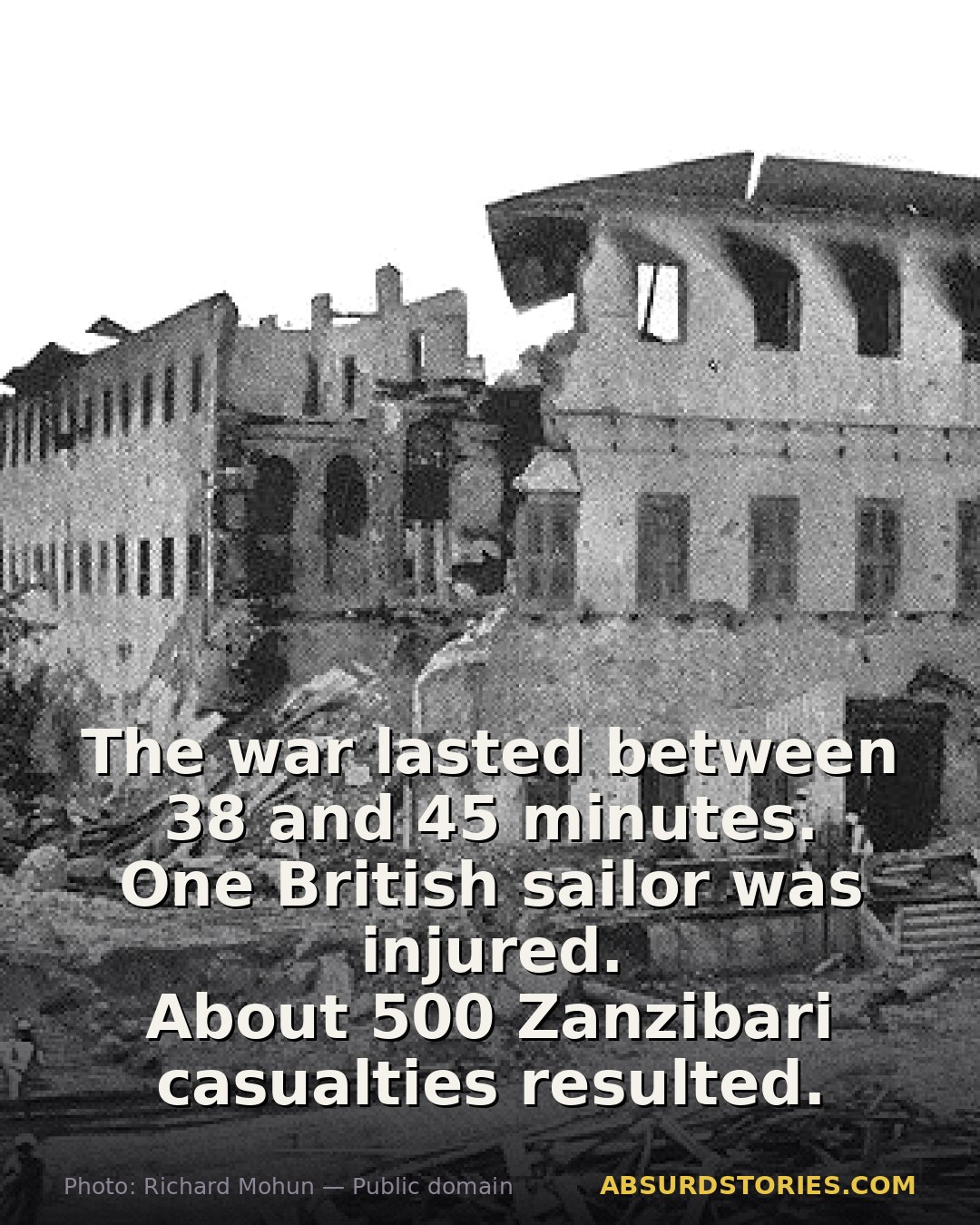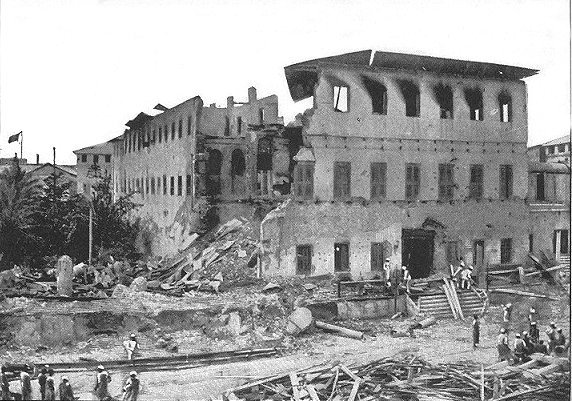
On August 27, 1896, the Anglo-Zanzibar War erupted. It is recorded as the shortest war in history, lasting between 38 and 45 minutes. The conflict was ignited by the sudden death of Sultan Hamad bin Thuwaini, which raised suspicions of foul play.
The British favored another candidate, Sultan Hamoud bin Mohammed. He was seen as more aligned with British interests. This led to tensions as Sultan Khalid bin Barghash ascended to power without British approval, violating an agreement that required consent from the British consul.
As the deadline for an ultimatum passed, the British forces, comprising cruisers, gunboats, and marines, surrounded the Sultan's palace. Khalid responded by rallying his palace guard and fortifying his position. The British initiated a bombardment, which quickly rendered the palace defenses ineffective.
By 09:46, the conflict had concluded. The Royal Navy had incurred minimal loss, with only one sailor injured, while Zanzibari forces suffered approximately 500 casualties. Following the defeat, Sultan Khalid sought refuge in the German consulate and later escaped to German East Africa.
The aftermath led to the quick establishment of a puppet government under Sultan Hamoud, cementing British influence over Zanzibar. This brief war marked the end of Zanzibar's sovereignty, transitioning it into a period dominated by colonial powers.