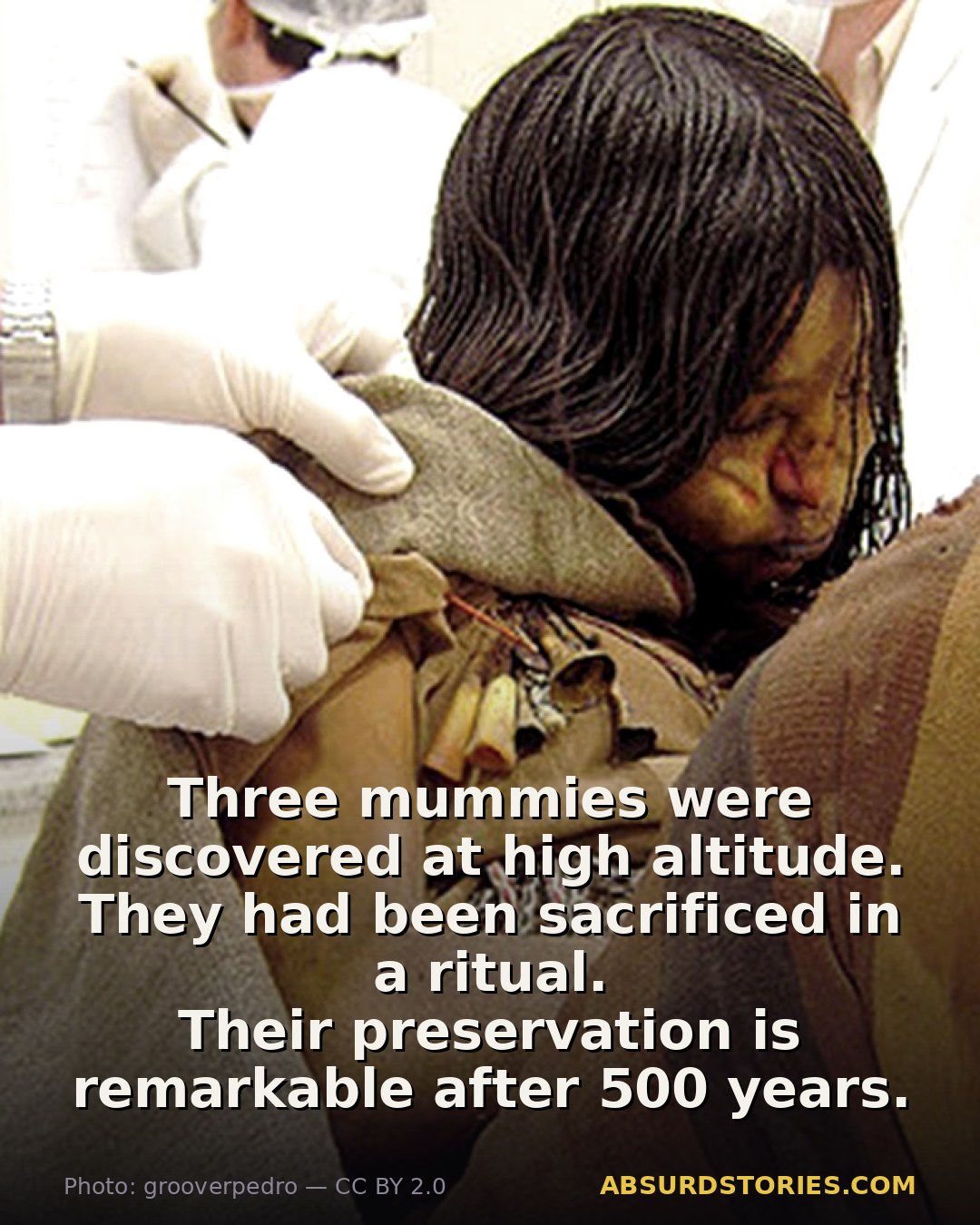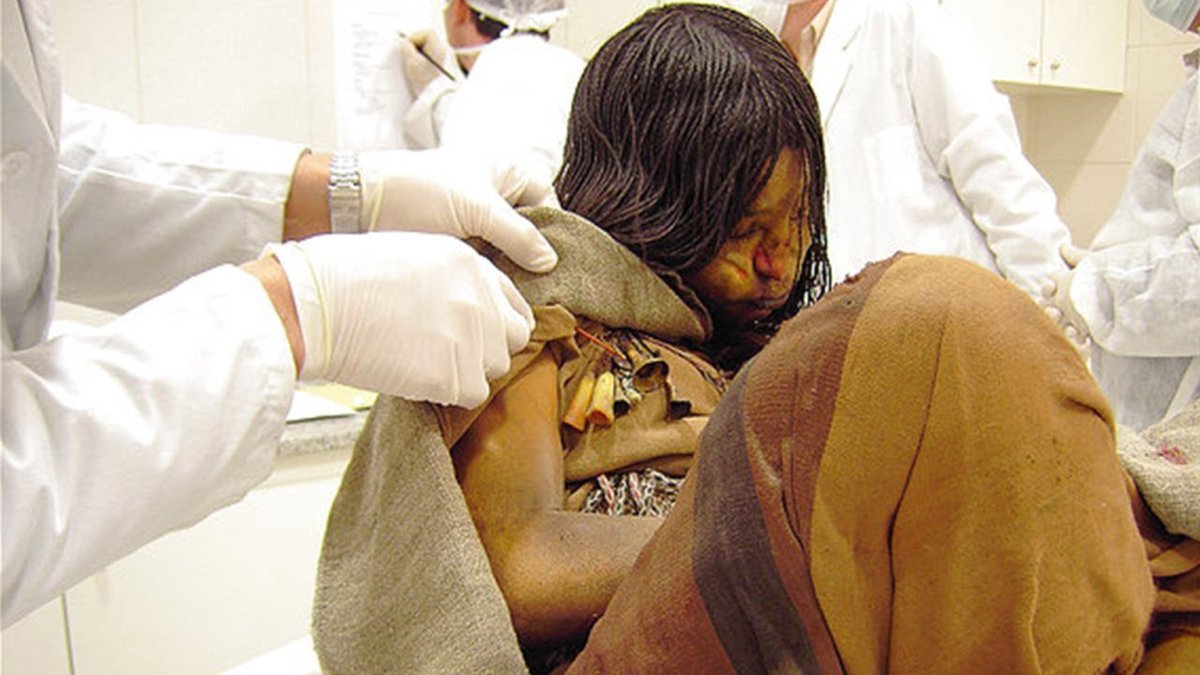
Three child mummies were discovered near the summit of a volcano on the Argentina-Chile border. Archaeologists found them in 1999, buried about 1.5 meters underground. These children were part of an Inca ritual sacrifice that occurred around the year 1500.
To prepare for their deaths, the children were drugged with coca and alcohol. They were then placed in a small chamber and left to die. The rituals included months of preparation and a careful selection process, with children often chosen from elite families.
Scientific analyses revealed that one child, La Doncella, consumed large amounts of coca in the months before her sacrifice. Her remains showed signs of a bacterial lung infection, but it is unknown if that contributed to her death. Another child, El Niño, may have suffered from complications due to the extreme altitude.
Remarkably, the mummies were well preserved due to the cold and dry conditions at their burial site. The mountain's location near the Atacama Desert played a crucial role in halting decomposition. When found, the children’s soft tissues and hair remained intact, with one of their hearts still containing frozen blood.
The conditions of the mummies varied slightly. One child, La Niña del Rayo, was struck by lightning, causing damage to her face and shoulder, yet she too was well preserved.
The Children of Llullaillaco are recognized as some of the best-preserved mummies in the world. Their discovery has provided valuable insights into Inca rituals and the practices surrounding child sacrifice.