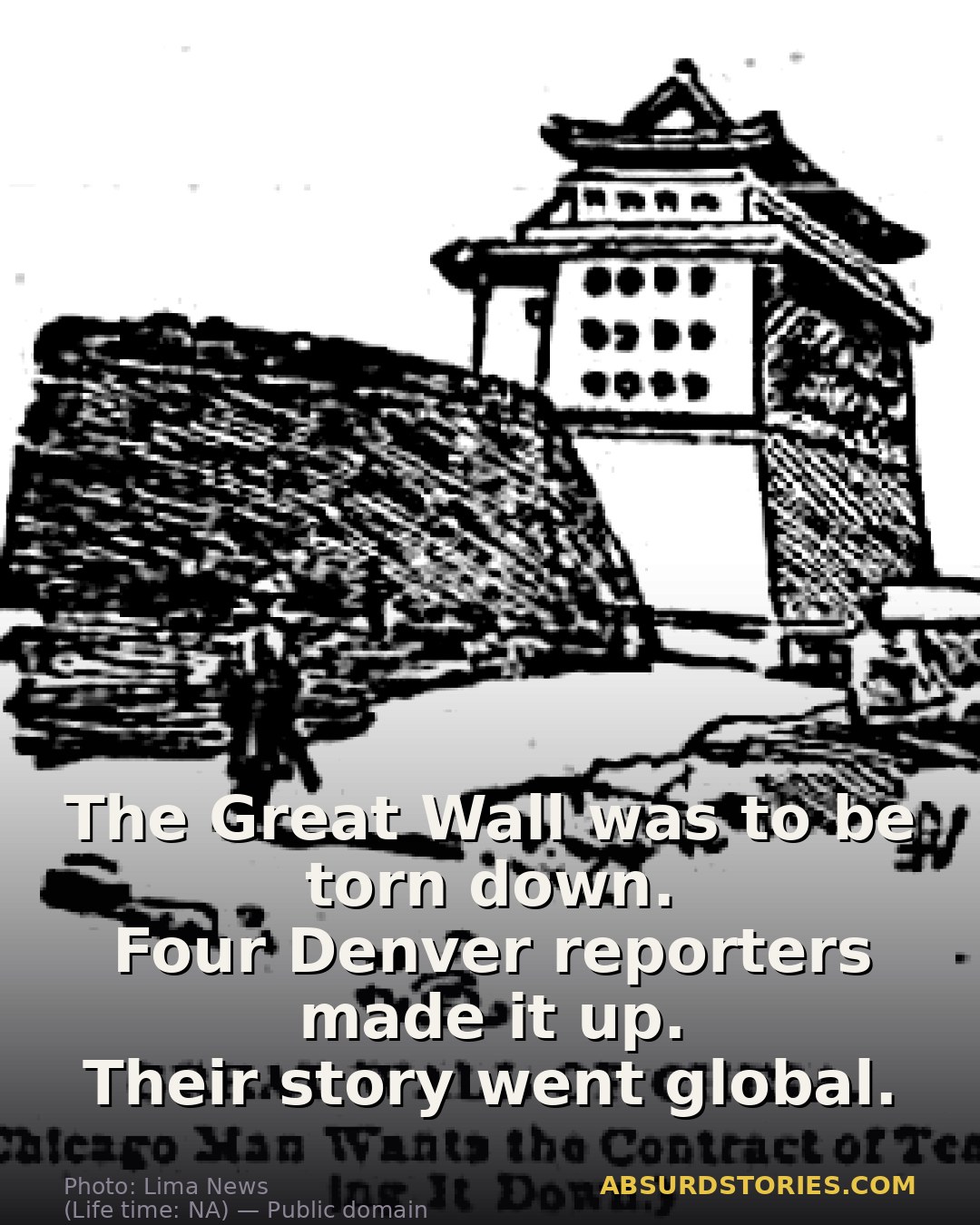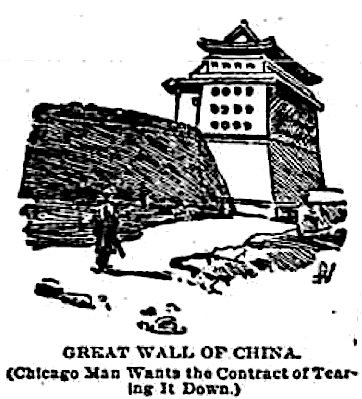
In 1899, four reporters in Denver concocted a wild tale about the Great Wall of China. They claimed American businesses were bidding to demolish it and replace it with a road. The absurdity didn’t end there; their story was picked up by newspapers far and wide.
The hoax began when the reporters, frustrated by their lack of newsworthy subjects, decided to invent a story. They met by chance at Denver Union Station and, after some brainstorming, settled on the Great Wall of China. One reporter excitedly suggested tearing it down, thinking it would be an amusing twist.
They wrote a detailed account featuring bids from American companies, including one from a Chicago engineer. Each reporter signed fictitious names at a hotel to lend credibility to their scheme. The following day, all four major newspapers in Denver proudly printed the fabricated story on their front pages.
This story, initially dismissed after a few days by local papers, took on a life of its own as it spread across the nation and even into Europe. Other newspapers began embellishing it with quotes and illustrations, further blurring the lines between fact and fiction.
Years later, a songwriter named Harry Lee Wilber added another layer to this tale by claiming the hoax had sparked the Boxer Rebellion in China, although historians later debunked this connection. Despite the initial fiction, the hoax illustrated the complex interplay of media, history, and cultural perceptions.
Ultimately, the event shows how a simple prank could echo through time, leaving a curious legacy of misunderstanding and miscommunication.