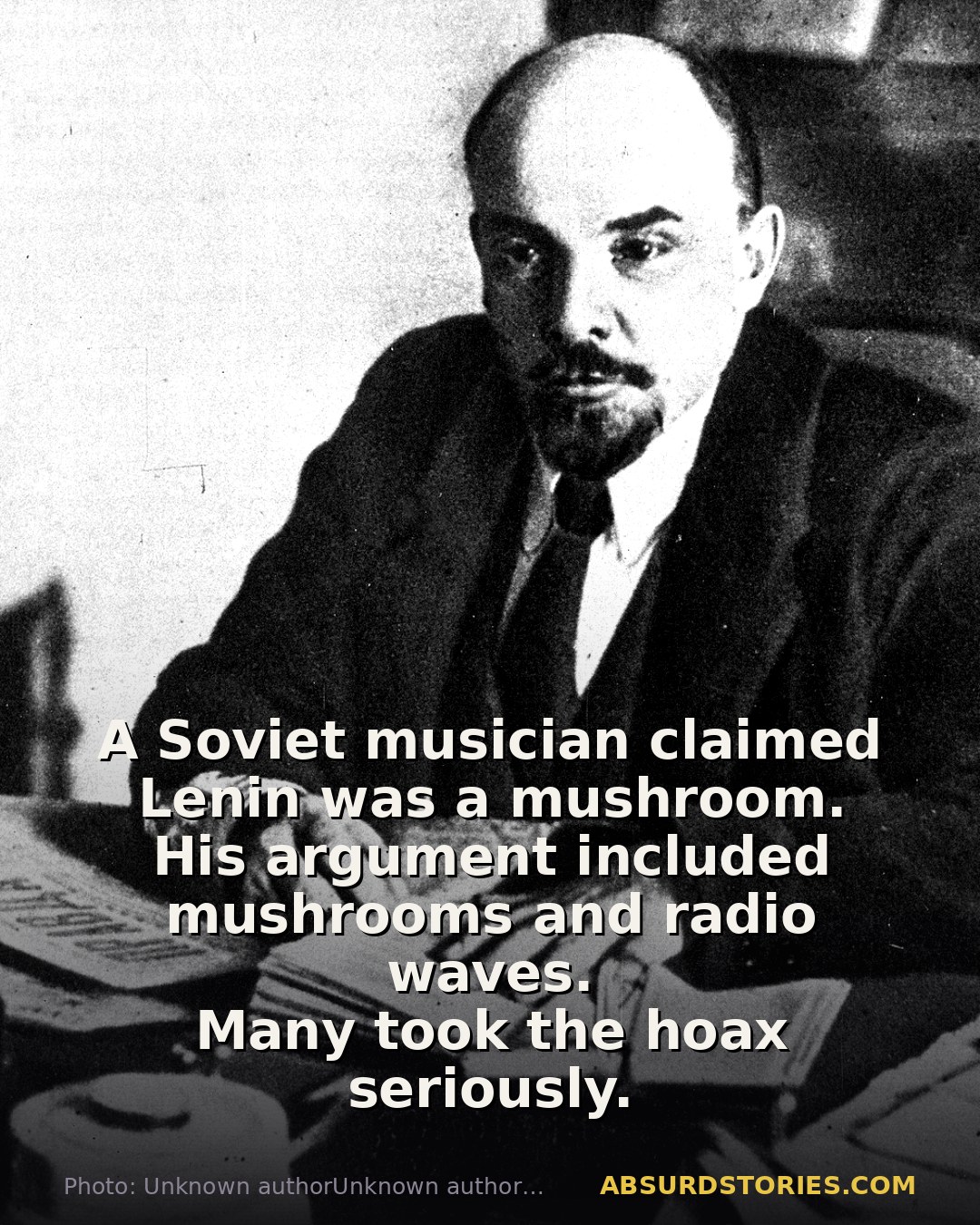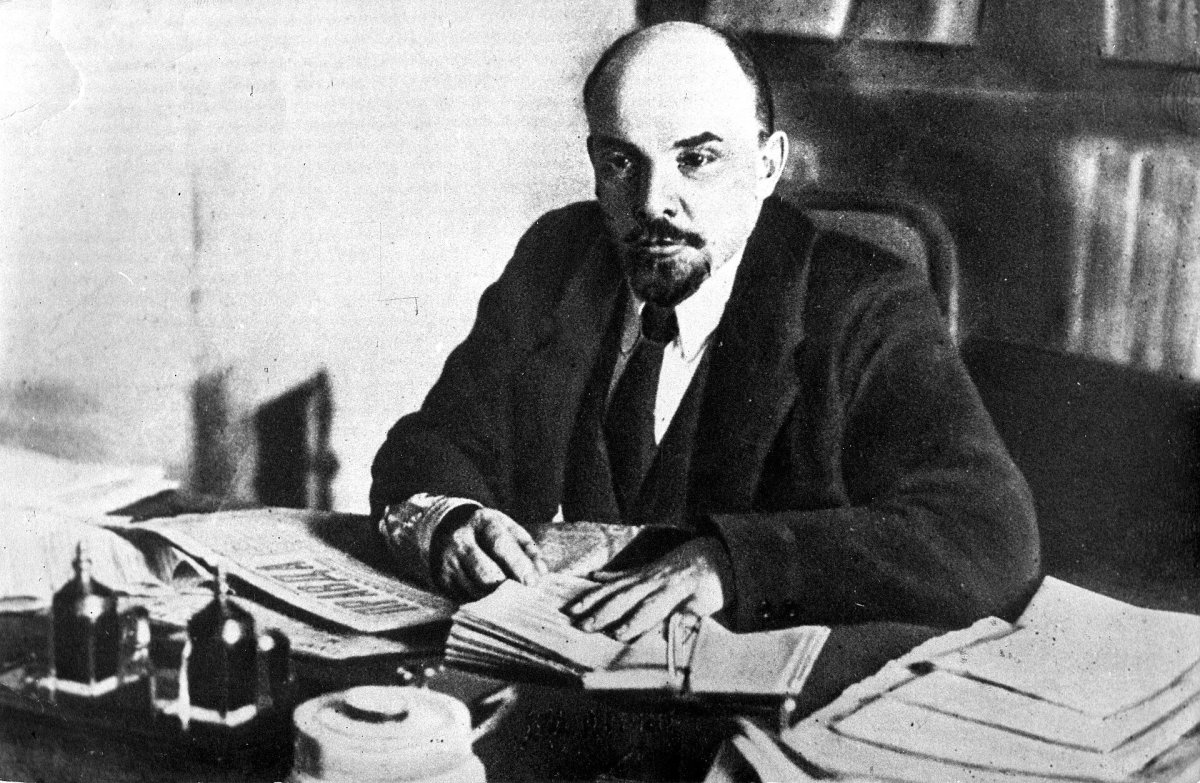
In 1991, a bizarre televised hoax claimed that Vladimir Lenin was not just a revolutionary leader but a mushroom. The absurd assertion was made during an interview on Leningrad Television's program, The Fifth Wheel, by musician Sergey Kuryokhin. He impersonated a historian and presented a series of convoluted arguments suggesting that Lenin had consumed psychedelic mushrooms, eventually transforming into a mushroom and even a radio wave.
Kuryokhin's points relied on a mixture of logical fallacies and dubious sources, including references to Carlos Castaneda and MIT. His argumentation included such peculiar observations as the resemblance between the cross-section of Lenin's armored car and the spawn of a fly agaric mushroom. He even went so far as to claim that “ninel” — Lenin spelled backwards — was a French dish made from mushrooms.
As Kuryokhin elaborated, he proposed that the October Revolution was orchestrated by individuals who had consumed these mushrooms for years, leading them to lose their personalities and become mushrooms. The interview featured odd assertions about a boy always present beside Lenin, purportedly guiding him to mushroom spots.
This peculiar show emerged during the glasnost period in the Soviet Union when censorship was lessened and many historical truths were surfacing. Kuryokhin’s antics were part of a satirical commentary on how sensationalist claims could be presented as credible journalism. The response to the hoax was significant; some Communist Party members formally requested clarification on Kuryokhin’s outrageous claims. In a striking rebuttal, a director of the Lenin museum stated that a mammal could not be a plant, misunderstanding the classification of mushrooms entirely.
The absurdity of this situation highlighted how, even in a post-censorship era, the lines between fact and fiction could become blurred. Lenin, a figure of immense historical significance, was humorously reimagined as a mushroom, demonstrating the strange and often surreal nature of media in that time.